BYD Dolphin G DM-i
By Bill McCarthy
Let’s get one thing straight: the B YD Dolphin G isn’t really a supermini. Not in the traditional sense, as it is the first plug-in hybrid to appear in its segment and its bigger.
At 4,160mm long with a 425-litre boot, it’s closer in size to a Volkswagen Golf than a Ford Fiesta. BYD calls it a supermini; I call it plus size. Either way, you’re getting C-segment space for B-segment money.
According to Edvard Mecbergs, automotive Product Manager for the UK, it has been designed to target European buyers, where sharper steering and a more flexible ride are demanded.
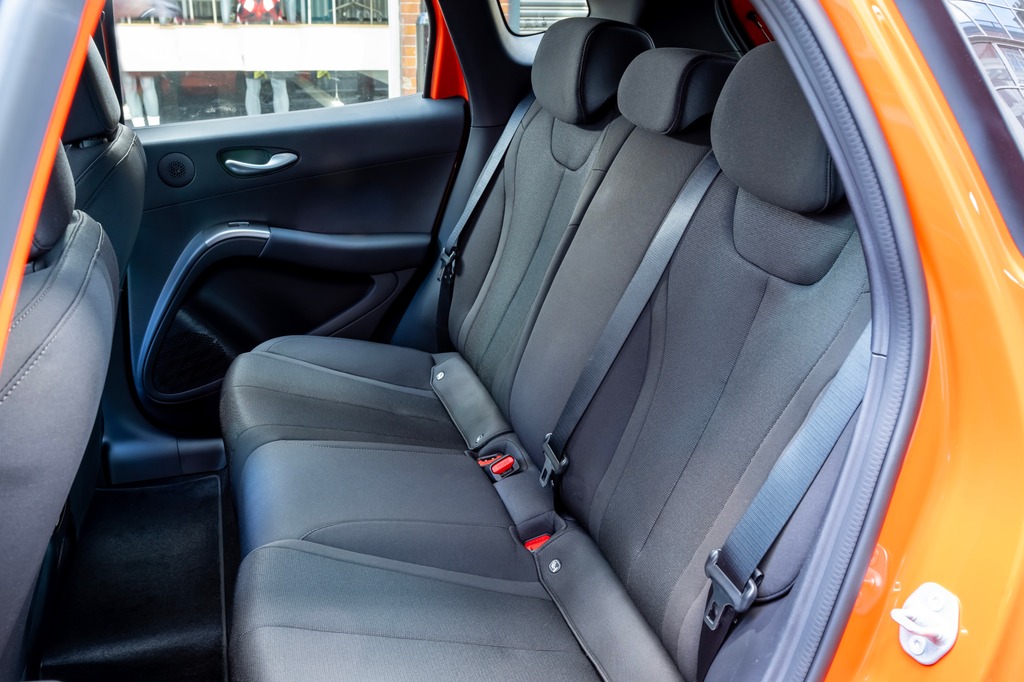
That extra room was proven when Edvard, a six-footer, sat comfortably in the back with ample head and legroom. The boot, meanwhile, is huge for this type of model.
Equipment and prices
The range starts at £23,990 for the Active trim and tops out at £29,490 for the Sport. That means even the fully loaded version undercuts rivals, many with none of the Dolphin G’s hybrid tech or equipment list. Four trims are available.
Active keeps things simple: 16-inch alloys, parking sensors, rear-view camera, LED lights, a 10.1-inch touchscreen, auto air conditioning and fabric upholstery. Boost adds the larger battery, a 12.8-inch screen, heated seats and steering wheel, ambient lighting, wireless charging, rear vents, eight-speaker audio and Vehicle-to-Load.
Comfort brings a head-up display, panoramic roof, puddle lights, vegan leather, an electric driver’s seat, a 360° camera, 18-inch alloys and Google integration. Sport adds discreet badging, darker alloys and a two-tone cabin with suede seat panels.
Exterior
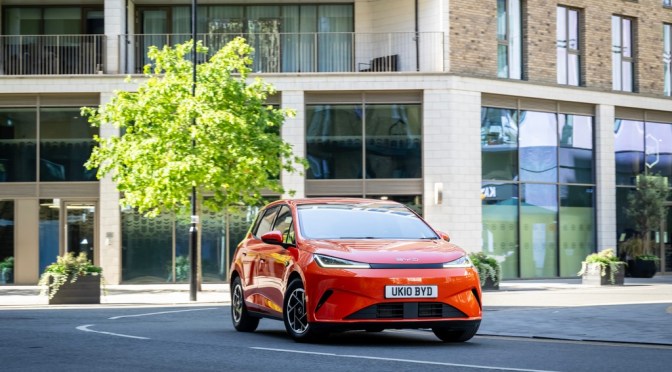
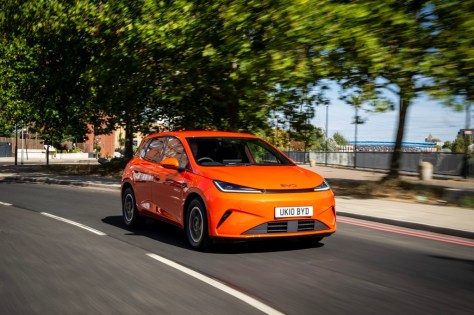
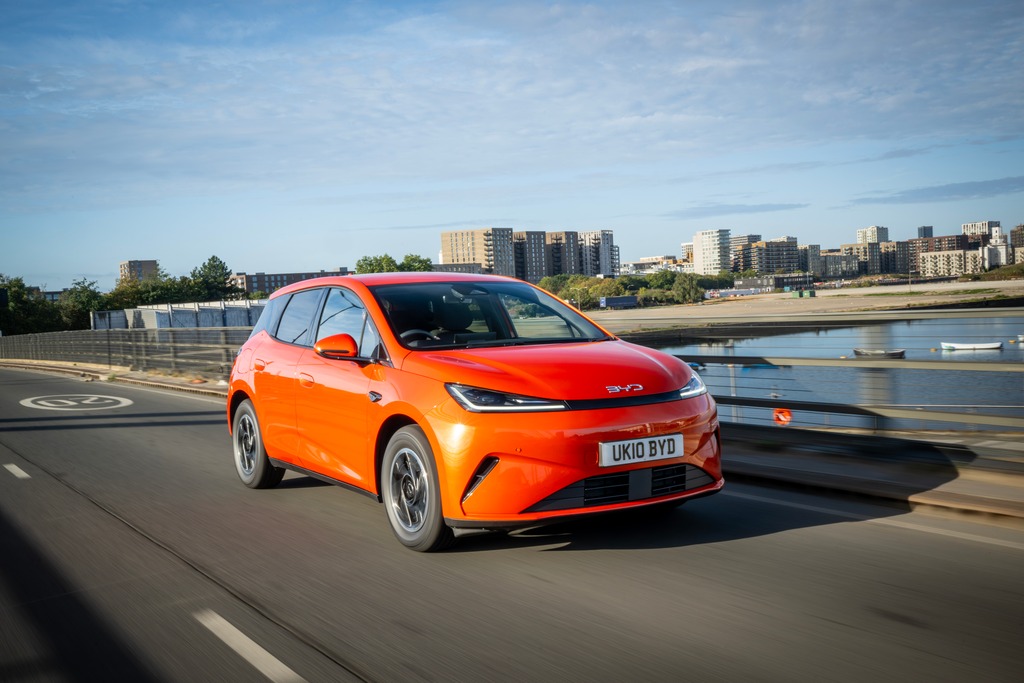
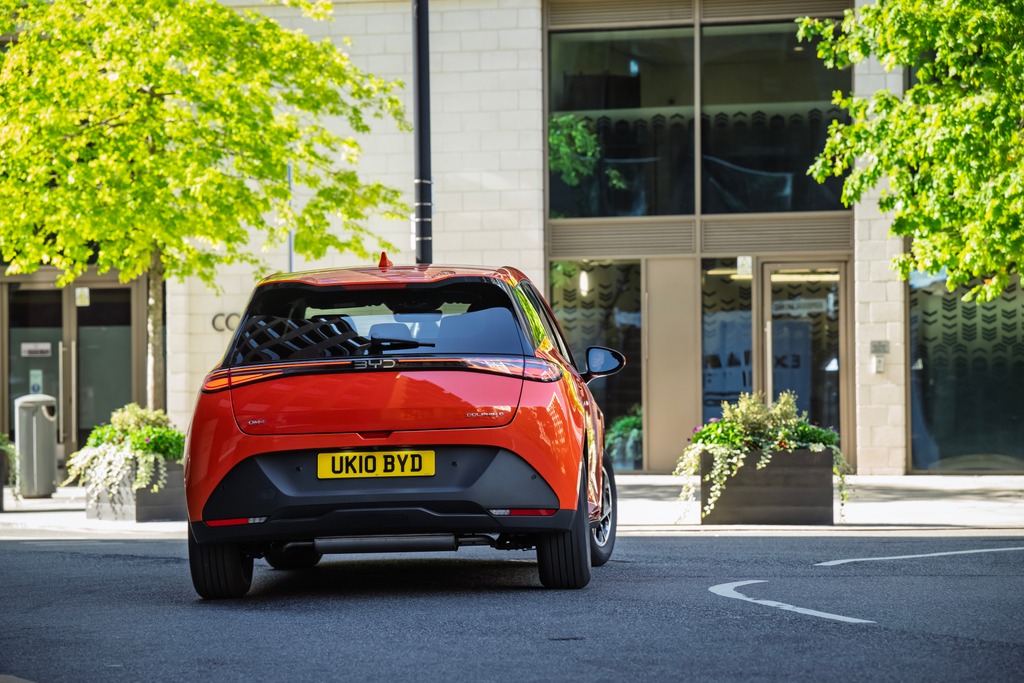
The look is very much in the eye of the beholder. I like the ocean-inspired front end with its smart light cluster and adaptive air intakes, complemented by either 16- or 18-inch alloy wheels. The rear, in my view, has a flatter profile, not helped even by the roof spoiler – but for that extra boot room, it’s worth it.
Interior
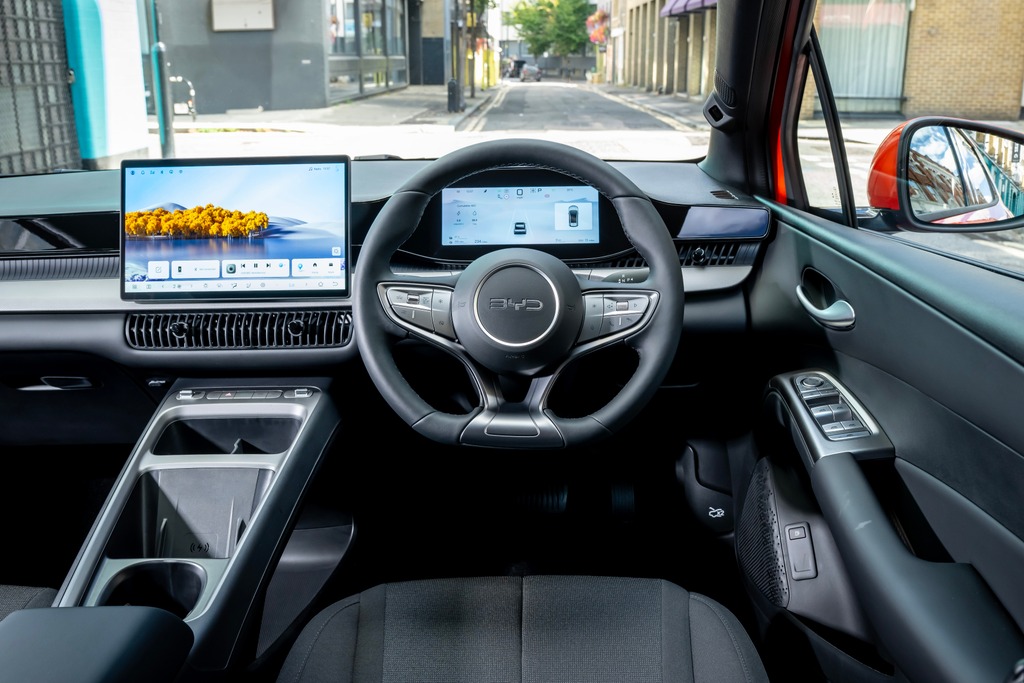
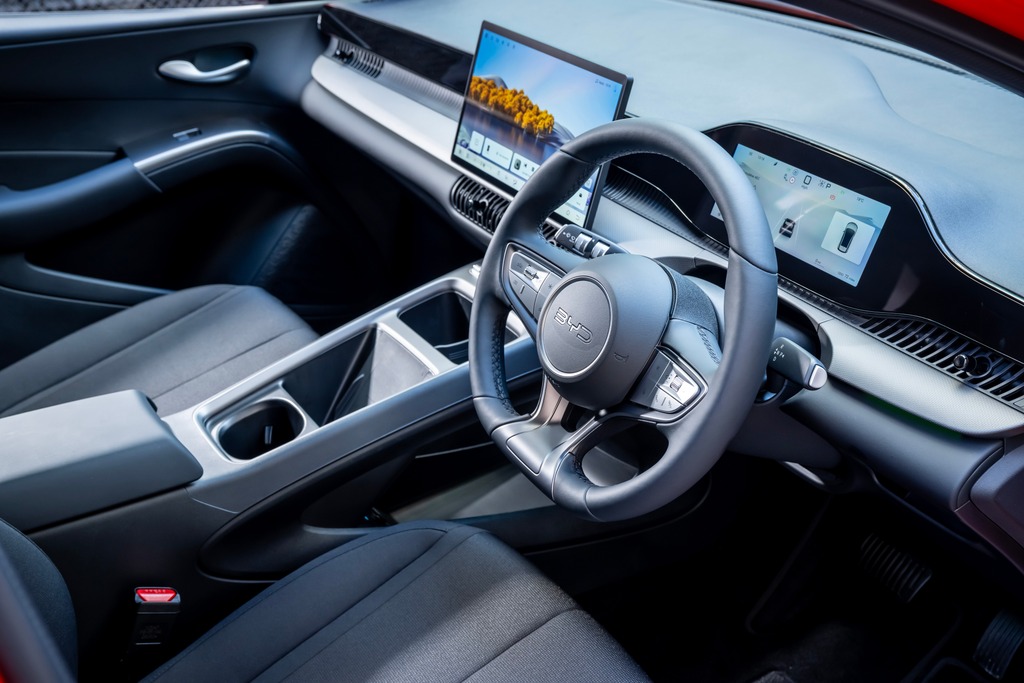
Inside it feels light and airy, particularly on the models with the panoramic roof. Seats are supportive and comfortable. A 2,610mm wheelbase delivers best-in-class space for five adults and the boot expands to a cavernous 1,225 litres with the rear seats folded.
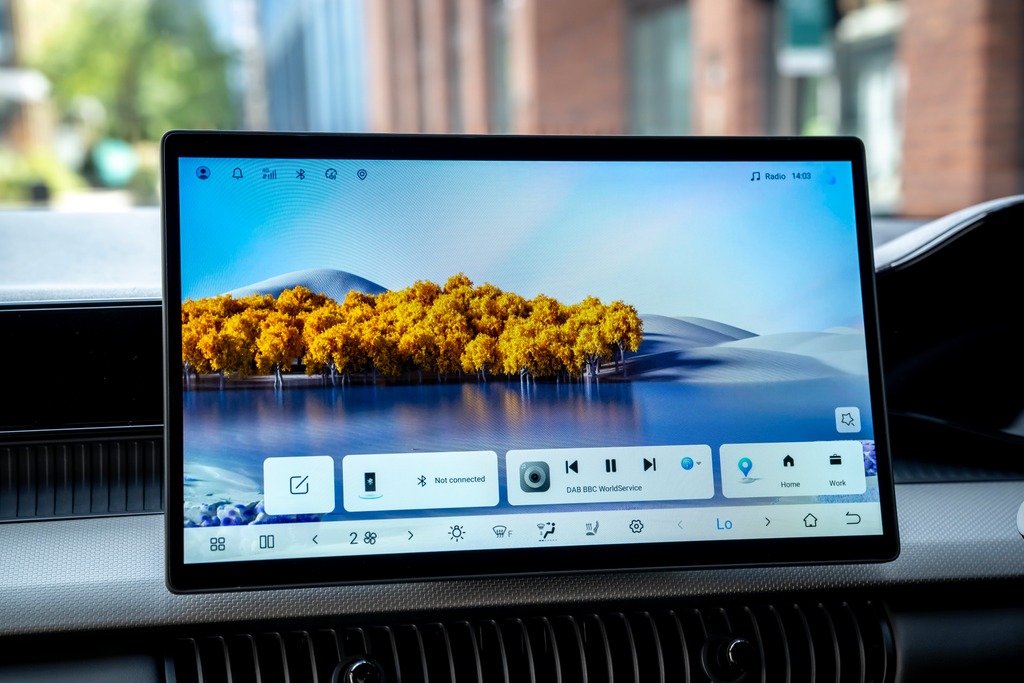
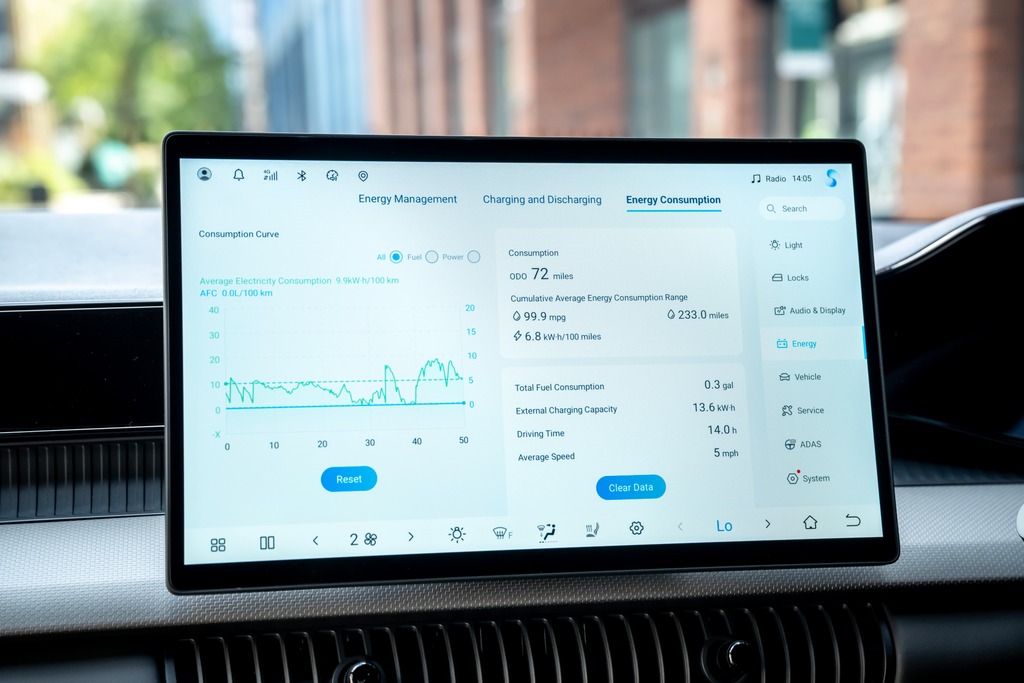
Central is a 10-inch or 12.8-inch infotainment touchscreen. This is supplemented by an 8.8-inch digital instrument panel that sits within the dash. The column-mounted gear selector frees space for dual-level storage, a cupholder and, on most versions, wireless charging.
Previous BYD models frustrated critics (myself included) with rotating screens, clunky software and irritating constant alerts. This has been largely addressed. A driver can now customise which screen stays on display with a single swipe of the screen, with the option of adding from the sub-menus later. It’s a small change that makes a big difference to daily usability.
Hybrid powertrain
The plug-in hybrid setup features a 1.5-litre petrol engine, two electric motors (one drive, one generator), and a choice of two batteries.
The engine mostly acts as a generator, with the electric motor doing the heavy lifting, delivering a quiet, EV-like feeling. In EV mode it runs purely on battery; in HEV mode, intelligent controls switch between five configurations, though it can also be manually controlled.
The motor produces 163PS and 210Nm, giving 0-62mph in a pretty rapid 8.3 seconds. It is largely muted but can become noisy when the pedal is depressed suddenly and does take a second to kick in.
Handling
Some colleagues and I disagreed on handling. I found it sharp, particularly on a very sharp curve on Fish Hill in the Cotswolds that nearly caught me by surprise, but it clung on confidently with the steering responsive and the ride pretty good too.
It’s the kind of car that could aspire to the Ford Fiesta’s handling prowess, if it were still around.
As for the ride, for the most part it never felt unsettled except a couple of times over the potholes plaguing our roads at the moment. Is it genuinely good or just better than I expected from a BYD?
Batteries and range
Two Blade Batteries are offered. Active has a 7.42kWh unit for 24.8 miles of electric range and 633 miles combined. Boost, Comfort and Sport step up to 18.3kWh, extending electric range to 65 miles and combined range to 646 miles while cutting CO2 from 60g/km to 32g/km.
Charging splits accordingly: Active gets a 3.3kW on-board charger, while the rest receive 6.6kW and 39kW DC charging, taking 10-80% in 26 minutes. The larger-battery versions return a claimed 201.7mpg — genuinely impressive at this price.
Safety
Every version comes with front and rear parking sensors, Adaptive and Intelligent Cruise Control, lane-keeping and departure assist, cross-traffic alert and brake, blind spot detection, driver monitoring and door opening warning. Comfort and Sport add a 360° camera—useful given the car’s footprint.
Verdict
For a car of this size and price, the Dolphin blends practicality, efficiency and surprising composure. It may not be a traditional supermini, but with C-segment space for B-segment money, that’s exactly the point. That said, the engine’s slightly delayed response and noise under sudden acceleration are a niggle. Strong for the money, but not flawless.
Hyundai i20 1.0 T-GDi 90 PS Tech Line Review: Sensible, Spacious, Surprisingly Well-Equipped
The Hyundai i20 has quietly become one of the most rounded superminis on sale. The Tech Line trim sits near the top of the range, and with the 1.0-litre turbocharged 90 PS petrol engine, it promises low running costs without stripping out equipment. It isn’t a hot hatch—that role belongs to the i20 N—but it is a genuinely likeable everyday car.
Performance and driving
Under the bonnet is a 998cc three-cylinder turbo petrol producing 90 PS and 172 Nm. It drives the front wheels through a six-speed intelligent manual gearbox, which can decouple the engine when coasting to save fuel. The numbers are modest: 0-62mph in about 11.5 seconds and a 112mph top speed. Yet the engine feels eager enough around town, with useful low-down torque and a characterful three-cylinder thrum. The iMT gearbox shifts cleanly, and the light steering makes city driving effortless.
The i20 feels composed on smooth roads, with a tight turning circle and good visibility. The trade-off is a firm ride, especially over potholes, but it rewards with decent body control. Drive modes adjust throttle response and steering weight, while cruise control makes longer journeys relaxed. Official economy is around 47.9mpg, with CO2 emissions of 134g/km, so running costs should be manageable.
Interior and equipment
The Tech Line cabin is a strong point. You get heated front seats, a heated steering wheel, and multi-colour ambient lighting, which makes cold mornings far more bearable. The driver’s seat is height-adjustable, and the rear bench splits 60:40. Electric front and rear windows, luggage hooks, and a front cup holder add everyday usability.
The dual-screen setup is the highlight: a 10.25-inch digital supervision instrument cluster and a 10.25-inch touchscreen with satellite navigation, Mapcare, live services, Apple CarPlay, and Android Auto. Climate control, windscreen auto-defog, an auto-dimming rear-view mirror, cruise control, and drive modes are all standard. Parking is easy thanks to front parking sensors and a rear-view camera, while automatic wipers with a rain sensor, rear seat alert, wireless charging pad, and USB ports front and rear keep life simple. There’s also a smart key with engine start button, immobiliser, and steering wheel remote controls. A temporary mobility kit, privacy glass, and aero wiper blades complete the package. Some plastics are hard to the touch, but the layout is logical and the kit count embarrasses pricier rivals.
Practicality and safety
Boot space is 352 litres, expanding to 1,165 litres with the rear seats folded—among the best in class. Trailer wiring is included, and the 60:40 split makes carrying longer items easy. Rear passengers get a USB-C charging port, and the rear seat alert helps prevent leaving children or pets behind.
The i20 is also well protected. Standard safety kit includes lane keep assist, lane follow assist, intelligent speed limit assist, forward collision avoidance, driver and front passenger airbags, side and curtain airbags, ABS, ISOFIX, and childproof rear door locks. An eCall system adds peace of mind in an emergency.
Verdict
The i20 1.0 T-GDi 90 PS Tech Line isn’t the fastest or most exciting supermini. But it is efficient, practical, and remarkably well equipped. The firm ride and some cheap interior materials are minor flaws in an otherwise sensible package. With a five-year, unlimited-mileage warranty, it makes a compelling case for buyers who want technology and peace of mind without paying premium prices. It may not set your pulse racing, but it will make everyday driving easy.
FAST FACTS
Hyundai i20 1.0 T-GDi 90 PS Tech Line
Price: from £22,995 (approx)
Mechanical: 90ps, 998cc, 3-cyl turbo petrol, front-wheel drive, 6-speed intelligent manual
Max speed: 112mph
0-62mph: 11.5 seconds
Combined mpg: 47.9
Insurance group: 10E (approx)
CO2 emissions: 134g/km
BiK rating: 30% (approx)
Warranty: 5yrs/unlimited miles