Tag Archives: automobiles

Škoda vRS performance meets practicality

I drove my first Octavia vRS more than twenty years ago. That was the 1.8-litre turbo with 180hp and a manual gearbox, and it was a proper shock – a family hatchback that went like a hot hatch but didn’t punish you for it. The latest one version is quicker, cleverer, and more expensive, but the basic formula hasn’t changed: serious performance, proper space, and a price that undercuts most of its rivals.

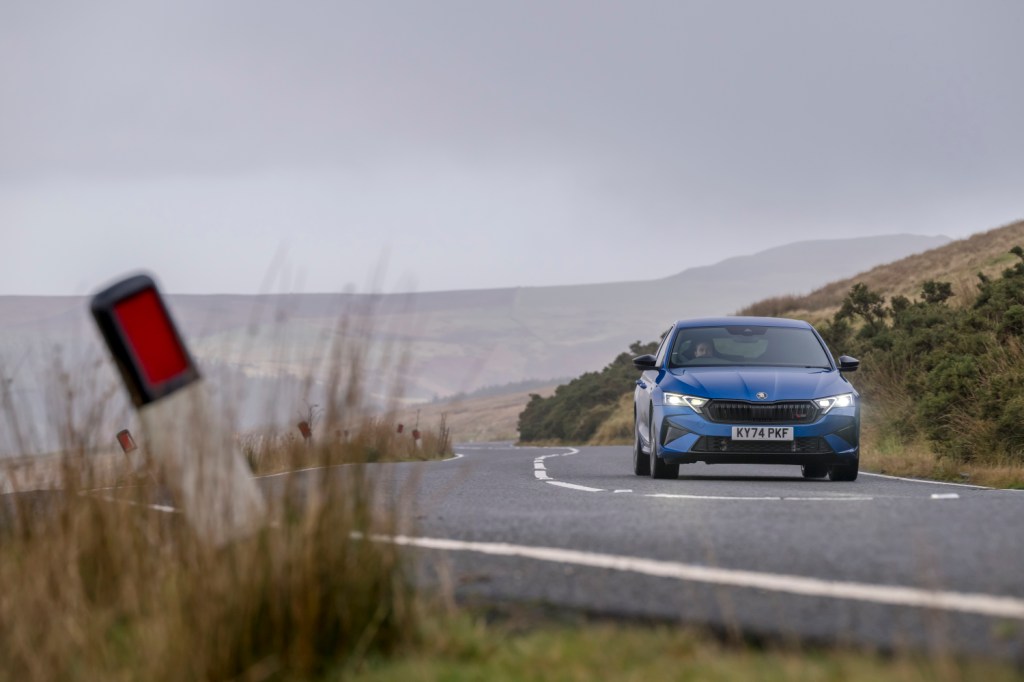
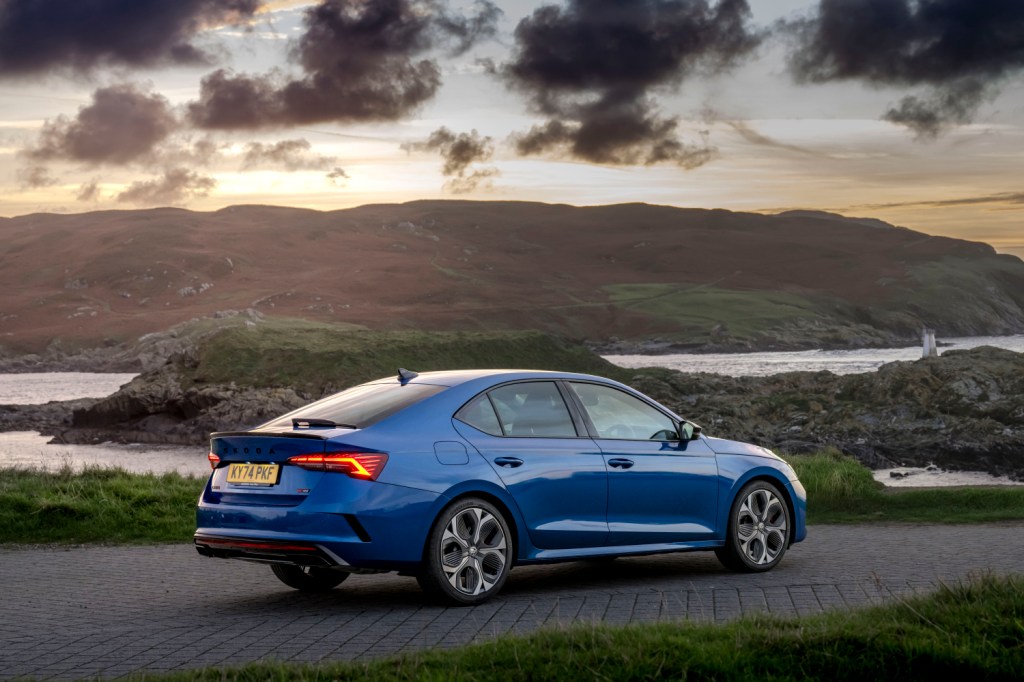
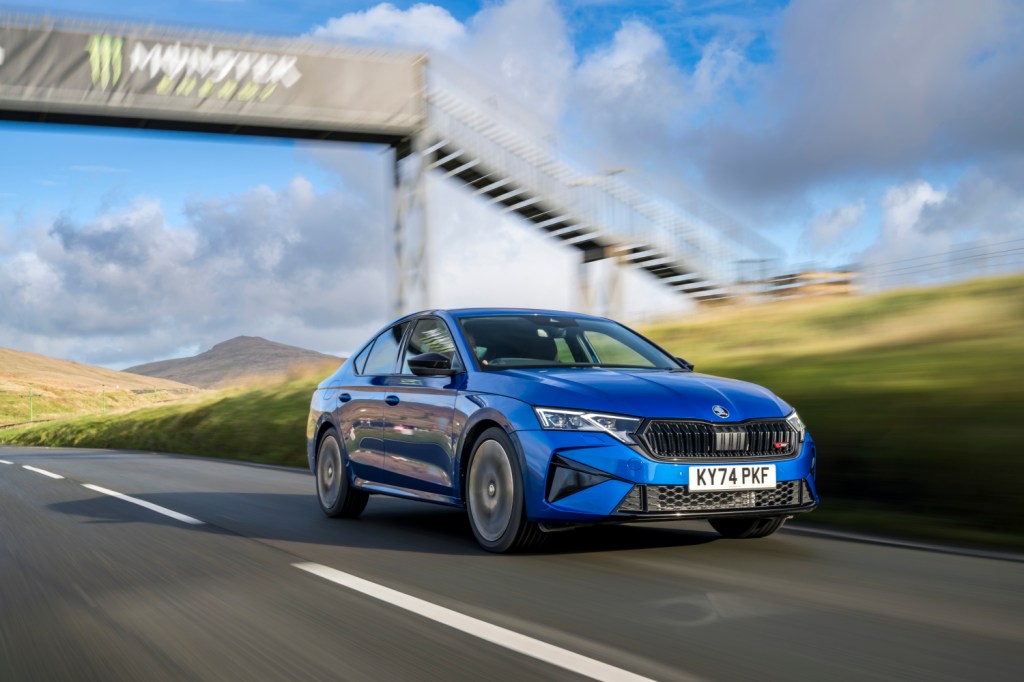
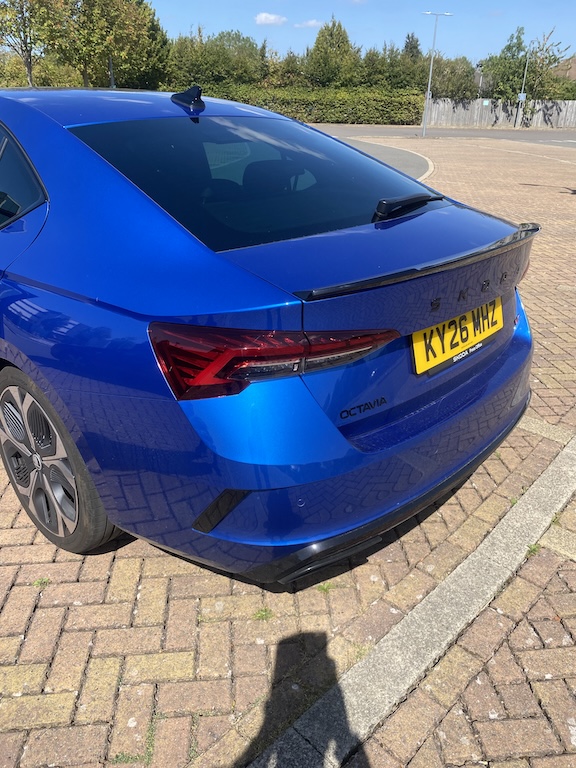
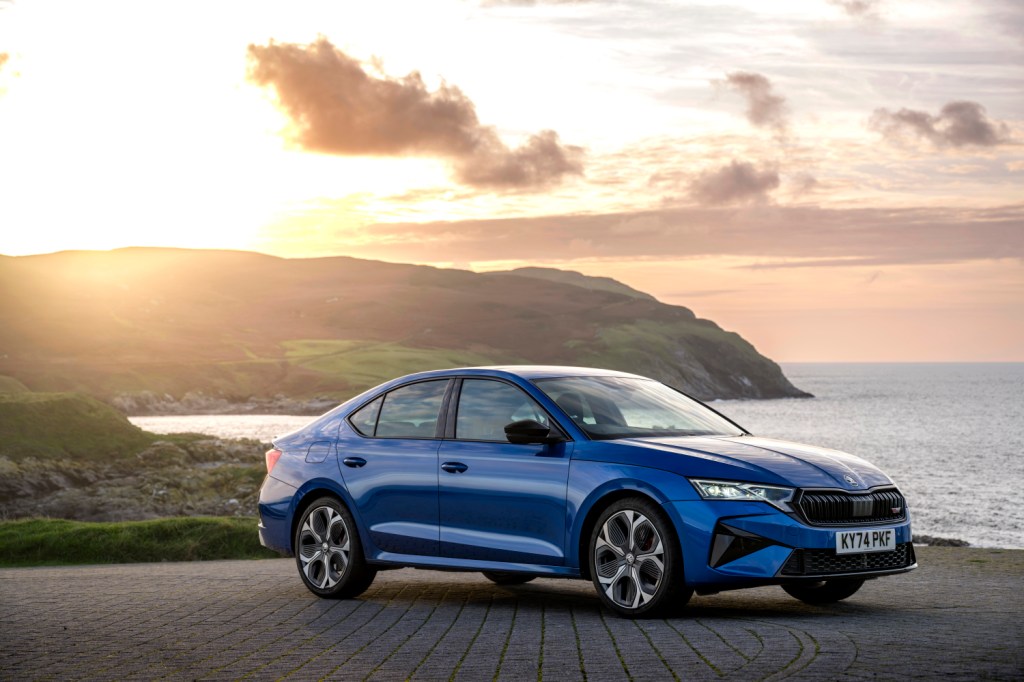
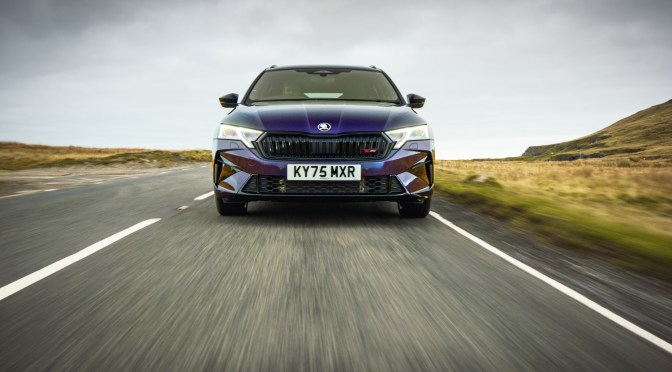
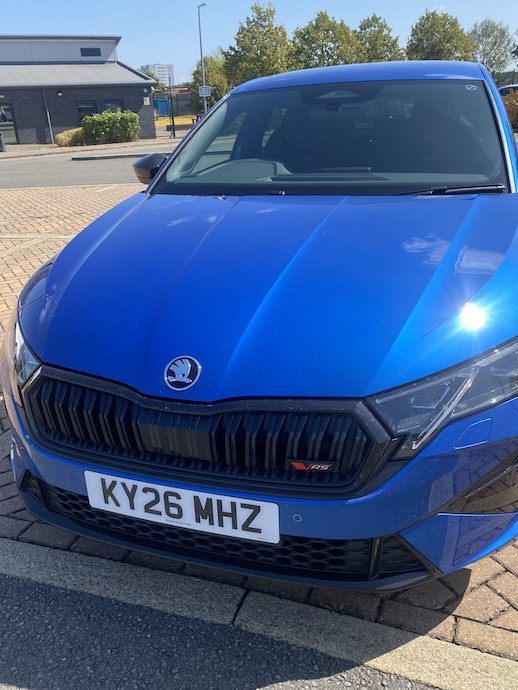
It looks the part, with black gloss accents replace chrome, the front bumper features large air intakes, and the signature vRS badging appears discreetly on the grille and tailgate.

Price and power

Now at £40,660. That’s a sizeable jump from the previous model I tested, which came in just under £34,000. You get a lot for the extra outlay, though. The 2.0 TSI engine now produces 265PS, sent through a seven-speed DSG gearbox that shifts crisply. It’ll hit 62mph in 6.4 seconds and run out of steam at 155mph, which is more than enough for UK roads.

On the road

What matters more is how it drives. I took it on some proper roads through the twisty stuff through the Derbyshire Peaks – and it proved as surefooted as a mountain goat. The grip is exceptional. You can push hard through corners that tighten unexpectedly, and the car just holds its line. The steering weighs up nicely without going heavy, and the suspension – lowered by 15mm over the standard car – keeps body roll in check. The growl of the twin exhausts adds a satisfying backdrop.

Clever differential
On paper, a front‑wheel‑drive car with nearly 270hp sounds like a handful – tugging at the wheel and spinning its tyres. In practice, the electronic differential shifts power between the front wheels smoothly – you just feel the car grip and power out of bends without any steering kickback. Rear‑drive purists will say it’s not the same, but the majority would barely notice the difference.

Practicality

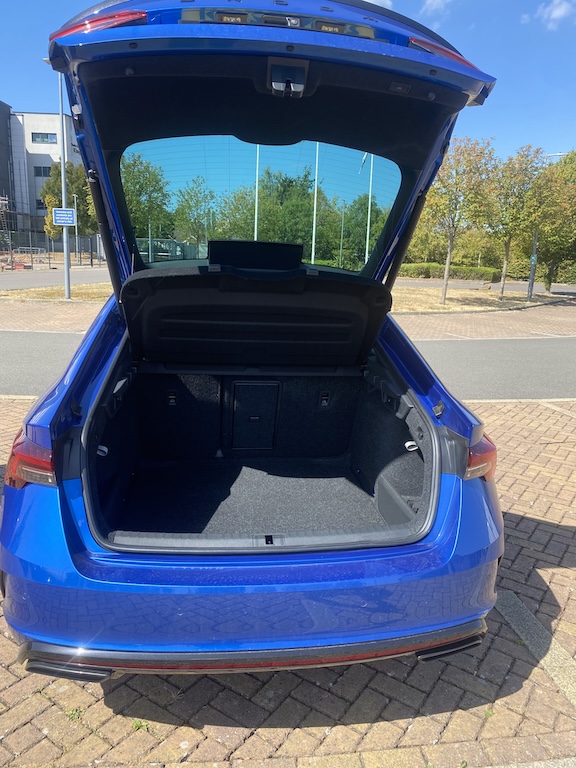
The boot is vast – 600 litres with the seats up, 1,555 litres with them folded. I shifted several heavy rubble bags and a dismantled flatpack on a tip run, and the car barely noticed. The load lip is low, the opening is wide, and you can option the virtual pedal for hands-free opening. It’s genuinely useful in a way that hot hatchbacks often aren’t. In addition, the  Skoda clever extras – like the ice scraper in the fuel filler flap, the umbrella under the passenger seat, and the ticket holder on the A-pillar – remind you this is a car built by people who actually think about everyday use.

Cabin and controls

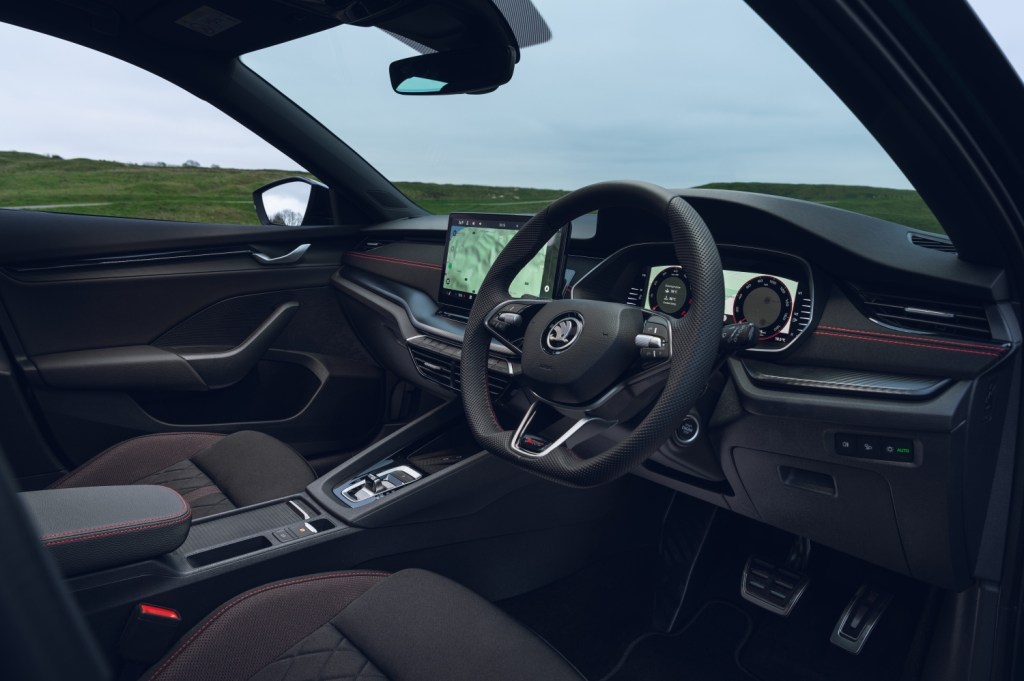
Inside, the cabin is understated and well built with comfortable, sporty branded seats.The 13-inch infotainment screen dominates the dash, but Skoda hasn’t gone for single-screen bells and whistles. You still get proper rotary dials for the climate control, physical buttons for the heated seats and drive modes, and a decent volume knob. After spending time in cars where every function is buried in touchscreen menus and sub-menus, it’s a relief. The screen is clear, allowing smartphone access, apps, infotainment and navigation where required.

Fuel economy

Fuel economy is better than you’d expect. I saw 45mpg on a motorway run, above the official WLTP combined figure of around 40.8mpg. It’s not a car you’d buy for economy, but it’s nice to be able to save the pounds at the petrol pumps.

Safety and family kit

Safety kit is comprehensive: blind spot monitoring, lane assist, predictive cruise control, front and rear parking sensors, autonomous emergency braking, and the usual airbag complement. ISOFIX points are fitted to the outer rear seats and front passenger seat, which matters if you’re ferrying children around.

Verdict

The Octavia vRS is fast, practical, well equipped, and returns better economy than its performance deserves. For some it lacks the prestige of a German rival or the drama of rear-drive, but it does everything so competently that you start to question what you’d actually gain by spending more. Day in, day out, it simply delivers. Twenty years on, that’s still what makes it a fine car.

Factfile

  • Škoda Octavia vRS
  • Price: £40,660 (as tested)
  • Mechanical: 265PS, 1984cc, four-cylinder petrol engine driving front wheels via 7-speed DSG automatic gearbox
  • Max speed: 155 mph
  • 0-62mph: 6.4secs
  • Combined mpg: 40.4 – 40.9mpg (WLTP)
  • CO₂ emissions: 155 – 160g/km 
  • Warranty: 3 years / 60,000 miles (standard manufacturer’s warranty)

Tiggo 9 – seven-seat practicality at a bargain price

Chinese brands have had remarkable success over the last couple of years, with sales booming and capturing a significant share of the UK market. It’s not hard to see why – they offer low prices, advanced technology (some would argue a little too. advanced), and cheap finance deals

That’s a heady mix for those looking for a motor in the middle of a cost-of-living crisis. They are even undercutting Korean brands, which themselves undercut more established brands over the past 20 years.

However, doubts remain over uncertain resale values and little data about long-term reliability. Chery is one of the biggest Chinese manufacturers, owning both fast-selling Omoda and Jaecoo, but has also launched vehicles under its own name. And so far, they are proving impressive. Following a drive in the Chery Tiggo 7, this was followed by a test in its flagship model, the Tiggo 9.

What does it offer?

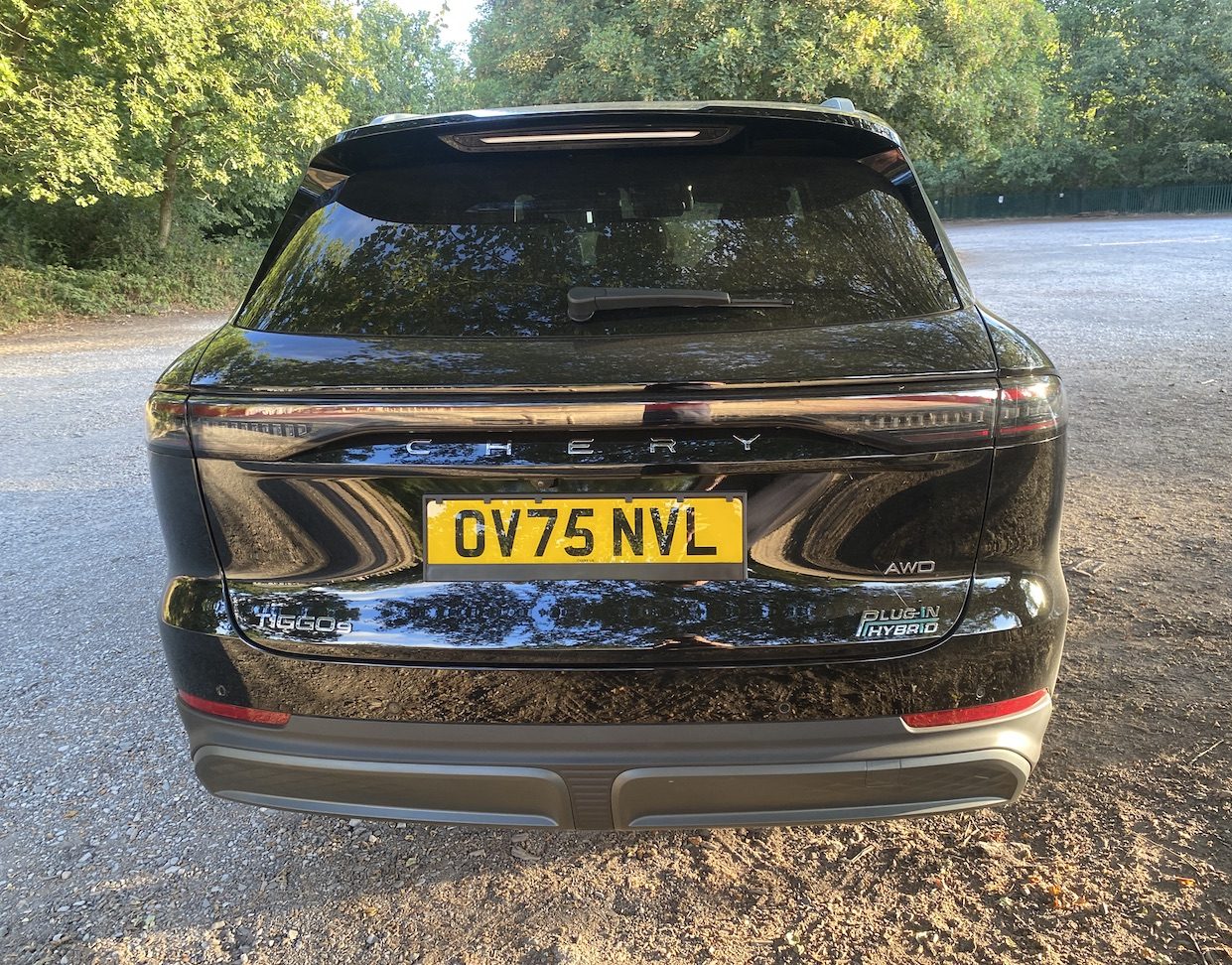
It’s huge, nearly five metres long, and is a full seven-seater plug-in hybrid with all-wheel drive. It is packed with equipment, has a range of around 650 miles (WLTP) and undercuts rivals significantly with a price tag of around £43k.

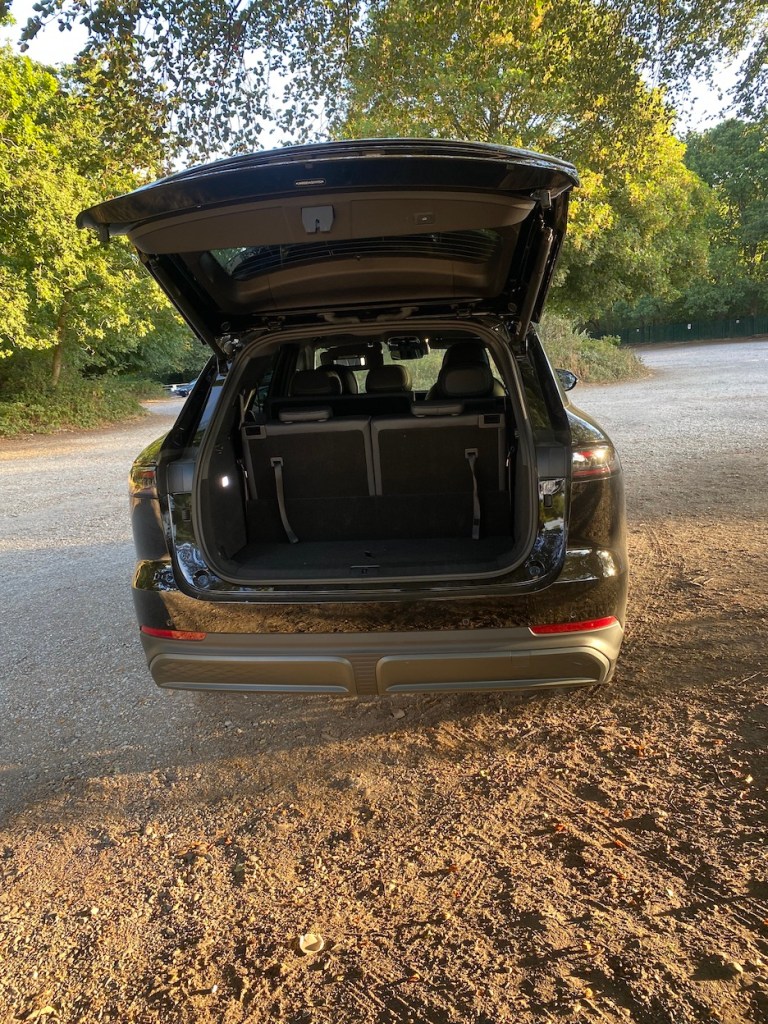
It can also double up as a removal van; when we moved a three-seater settee, the flat loading space swallowed it up. Safety kit includes autonomous emergency braking, adaptive cruise control, lane-keeping assist, blind-spot monitoring, and a 360-degree camera, all standard.

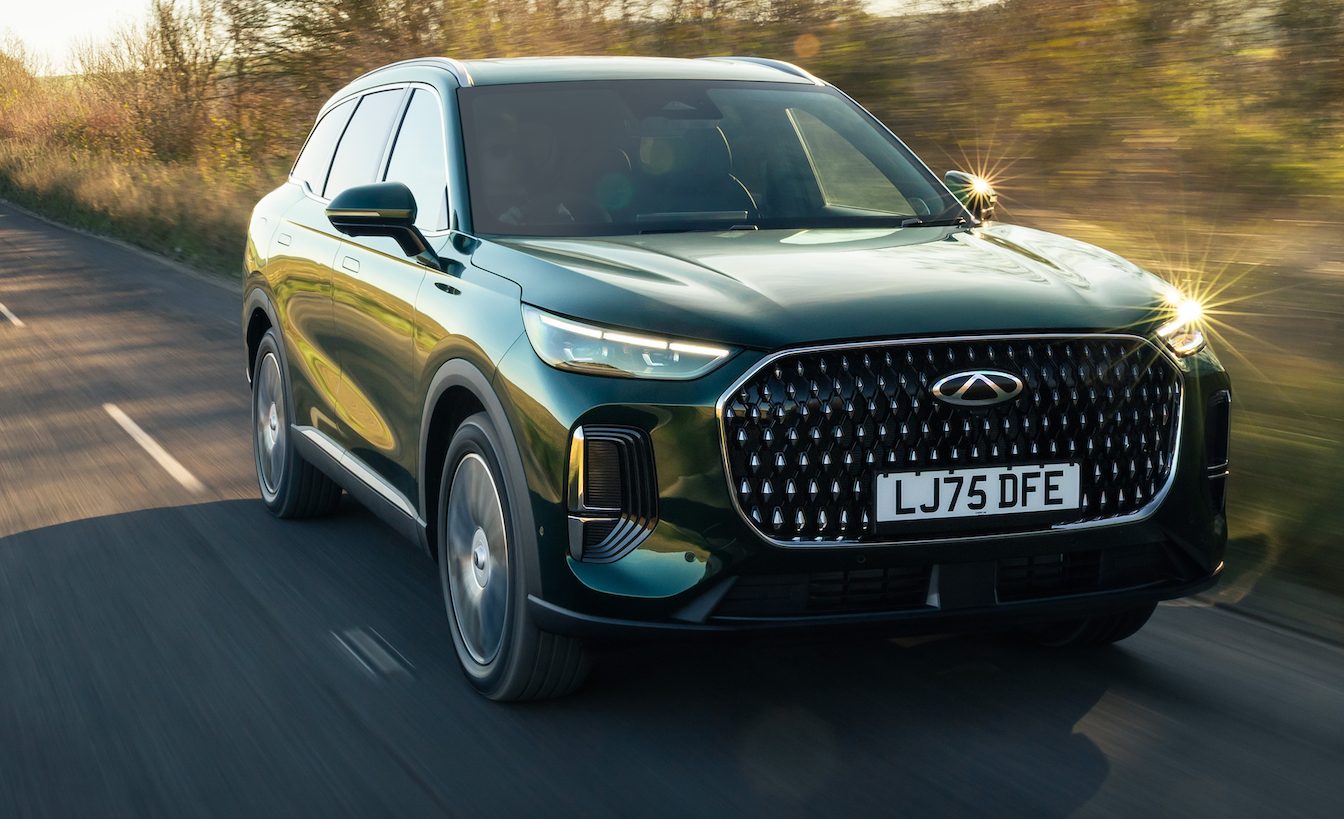
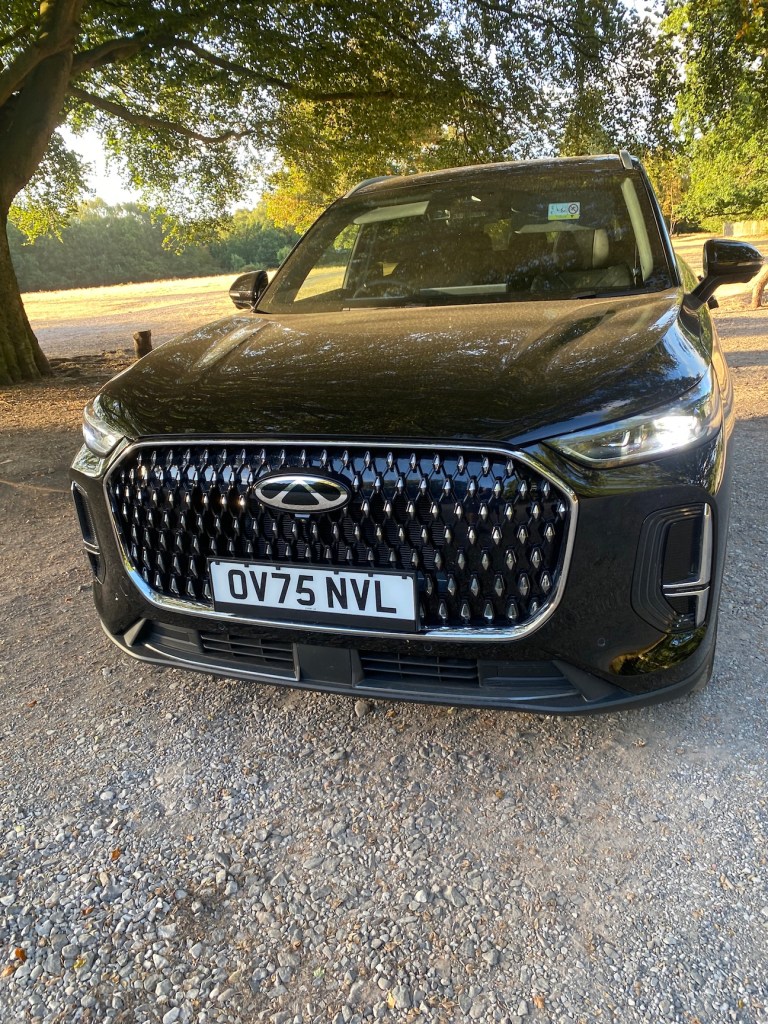
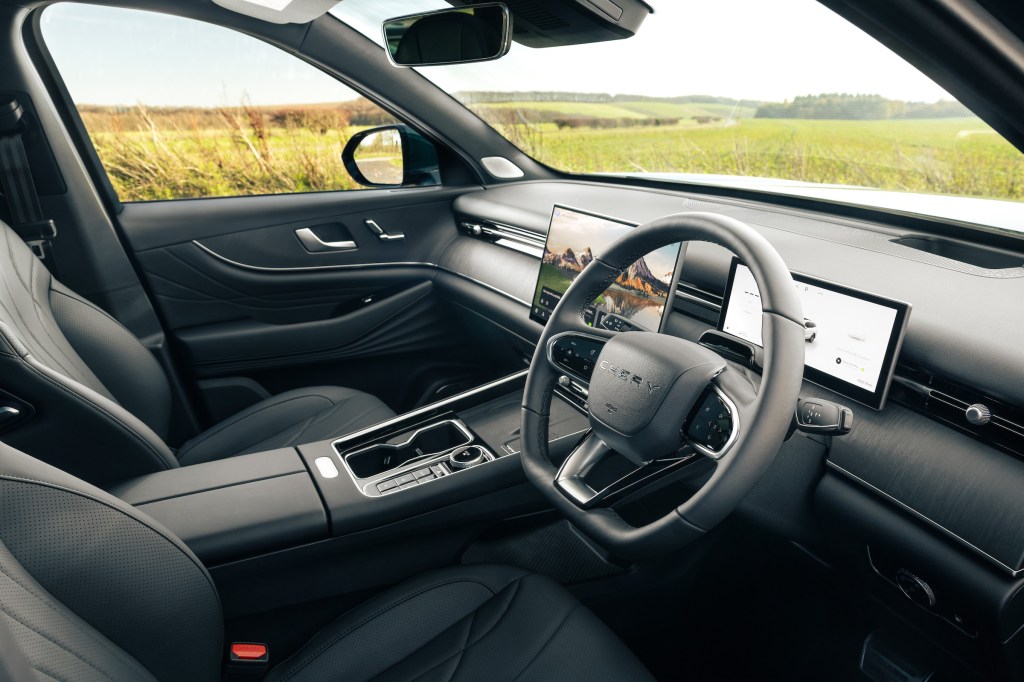
Known as the Tiggo 9 CSH (Chery Super Hybrid), it’s stylish and offers a high‑end interior. On the outside, it cuts a bold, imposing figure, with a large chrome grille, slim LED headlights, and sharp creases along the flanks that give it a distinctly premium stance – though the oversized badging does little to hide its Chinese origins. It comes in a single, fully loaded trim called Summit, with everything from heated seats to a panoramic sunroof as standard.

Powertrain

The plug-in hybrid pairs a 1.5-litre turbo petrol engine with twin electric motors and an automatic transmission. The combination delivers a combined 428 PS and 580 Nm of torque. Floor it, and it races to 62 mph in just 5.4 seconds – though the acceleration is smooth rather than brutal.

Just as impressive is its class-leading 91-mile electric range (WLTP) and a total range of over 650 miles, aided by a 34.46 kWh battery. That battery can rapid-charge from 30–80% in around 18 minutes and also features 6.6 kW Vehicle-to-Load (V2L) capability, letting you power laptops or camping gear.

On the road

It’s a pleasant drive. The car runs in pure EV mode at low speeds, then combines both power sources for strong acceleration. It feels almost EV-like with instant response, and even when the petrol engine kicks in, it remains quiet and refined.

Handling is not its strong point – it is, after all, nearly 16 feet long – and the steering is adequate at best. But keep it in a straight line, and it’s a blast. There are three drive modes – Eco, Normal and Sport – plus Snow, Sand and Off-Road settings for tougher conditions. Not needed during this hot summer test, but good to have in reserve.

Interior & tech

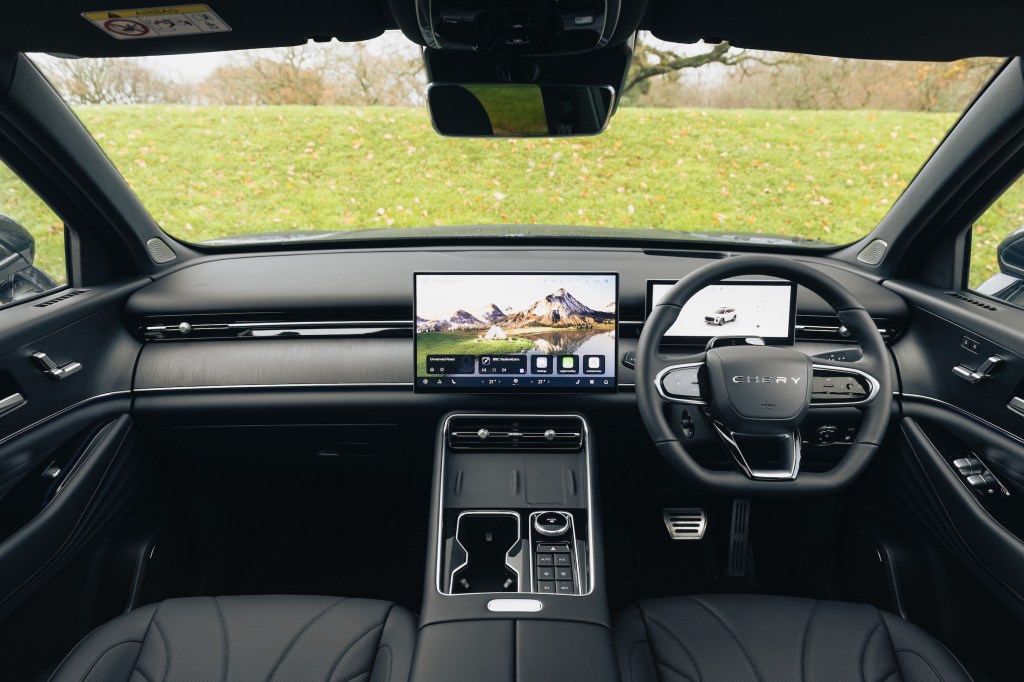
Inside, the standard kit reads like a luxury brand’s options list. There are heated, ventilated, and massaging front seats, with the second row also heated and ventilated. Central is a 15.6-inch touchscreen and a 10.25-inch digital instrument cluster. The central screen controls navigation, smartphone connectivity, and infotainment, with a 14-speaker Sony sound system.

My continued criticism of these systems is that they can be overly distracting. Some controls feel less like a quick setting and more like finding a needle in a haystack within a sub-menu of a sub-menu. Some safety assistance features, for instance, seem buried. The constant bing and bongs of the ADAS system also have to be turned down,

Practicality

It’s a genuine seven-seater with a 2+3+2 layout, though the rearmost seats are better suited to children. Boot space varies from 143 litres with all seven seats in use, expanding to 819 litres with the third row folded, and a cavernous 2,021 litres with both rear rows folded flat – enough to swallow furniture with ease.

Chery has a growing dealer network, and the vehicle comes with a 7-year/unlimited-mile vehicle warranty and an 8-year/100,000-mile warranty for the hybrid battery, plus roadside assistance.

While uncertainties around resale values and long-term durability remain, Chery is making a strong case by offering a huge, tech-laden seven-seat PHEV at a price that seriously undercuts European and Japanese rivals, backed by a warranty package designed to give buyers peace of mind.

Factfile

  • Chery Tiggo 9 CSH Summit
  • Price: £ 43,105 OTR
  • Mechanical: 428 PS, 1.5-litre turbo petrol with twin electric motors and 34.46 kWh battery, driving all four wheels via an auto transmission
  • Max speed: 115 mph (estimated)
  • 0 to 62 mph: 5.4 sec
  • Electric range: 91 miles (WLTP)
  • CO2 emissions: 33 g/km
  • BiK rating: 8% 
  • Warranty: 7 years/unlimited miles (vehicle), 8 years/100,000 miles (battery)