
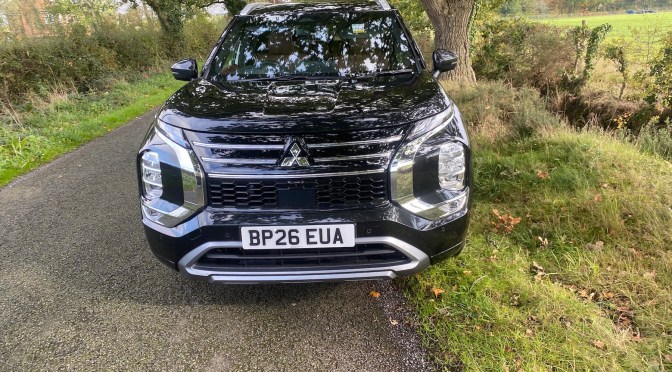
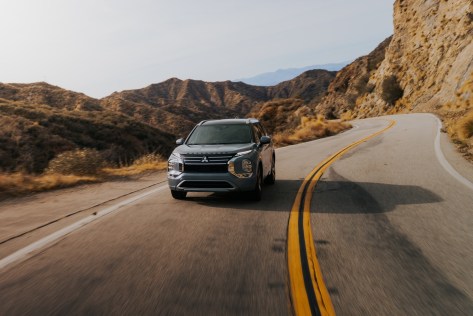
Mitsubishi Outlander Diamond PHEV
By Bill McCarthy
Mitsubishi’s UK departure left me scratching my head, especially given the success of the pioneering Outlander and its excellent L200 pick-up range. Poor sales and a global slowdown around the pandemic did for it – but now the Japanese giant is back with an impressive update.
Mitsubishi, famous for its rugged off-roaders, is certainly no stranger to innovation – it had one of the first all-electric cars on the road with the iMiEV city car and the original Outlander kickstarted Britain’s PHEV boom back in 2014, becoming a domestic bestseller.
Class-leading warranty
It’s worth pointing out early that Mitsubishi is backing its return with an eight-year or 100,000-mile warranty, covering both the vehicle and its battery technology. It is a market-leading package and appears to send a clear statement that Mitsubishi is here to stay.
Same boxy silhouette, less slab-sided
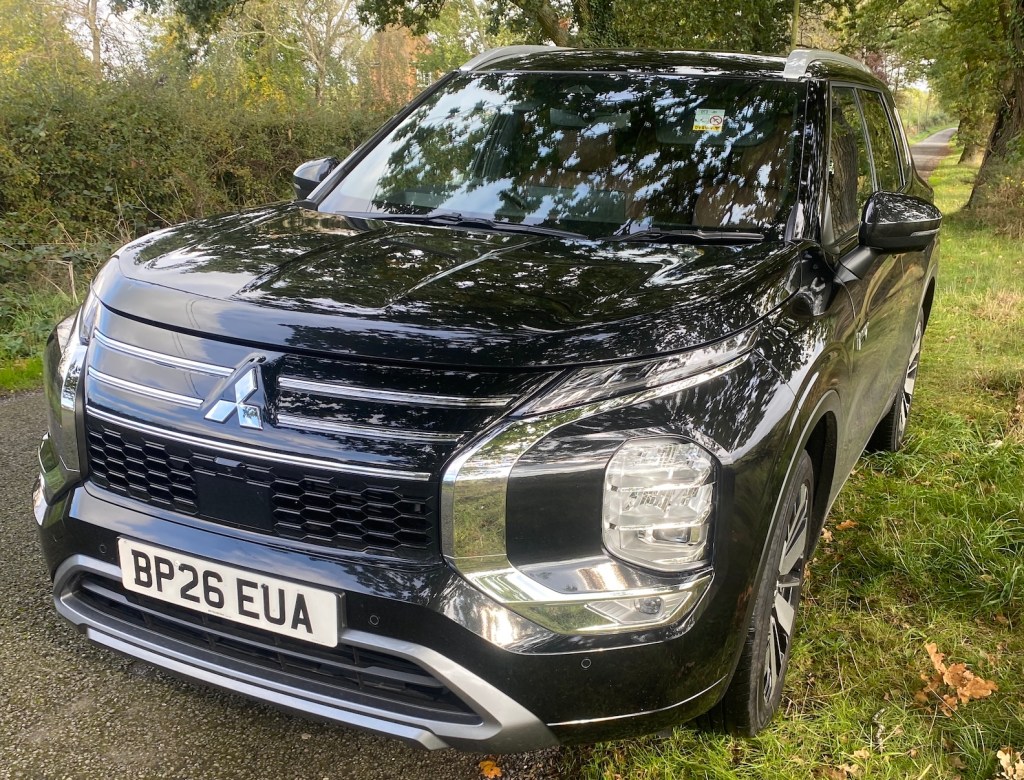
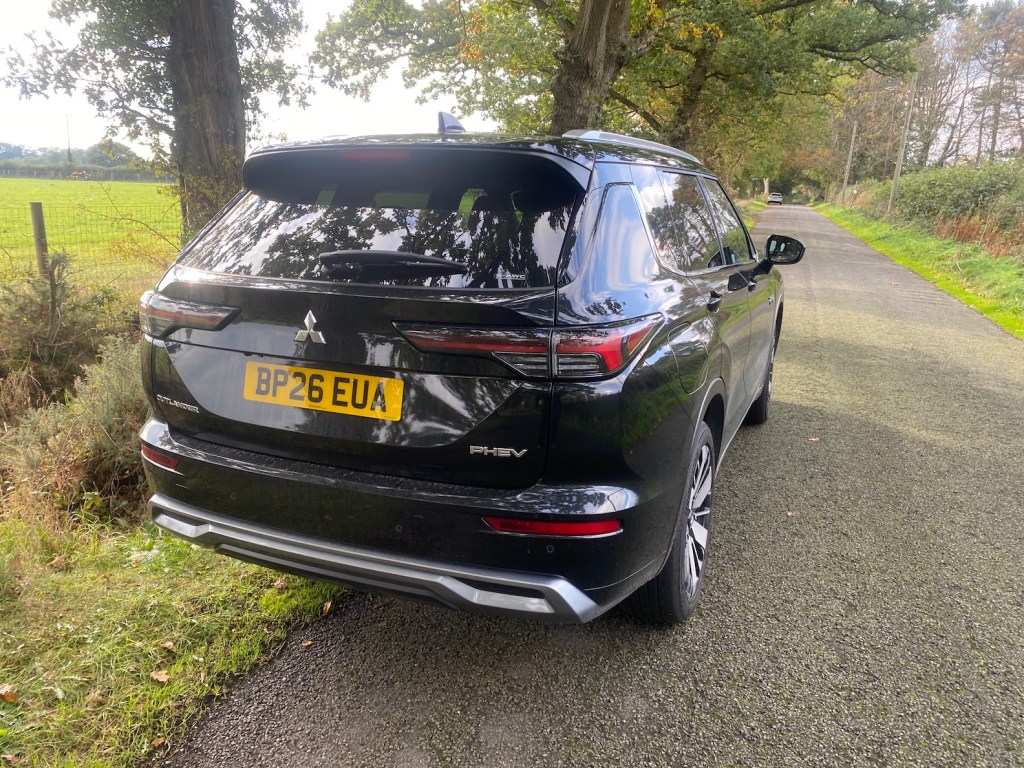
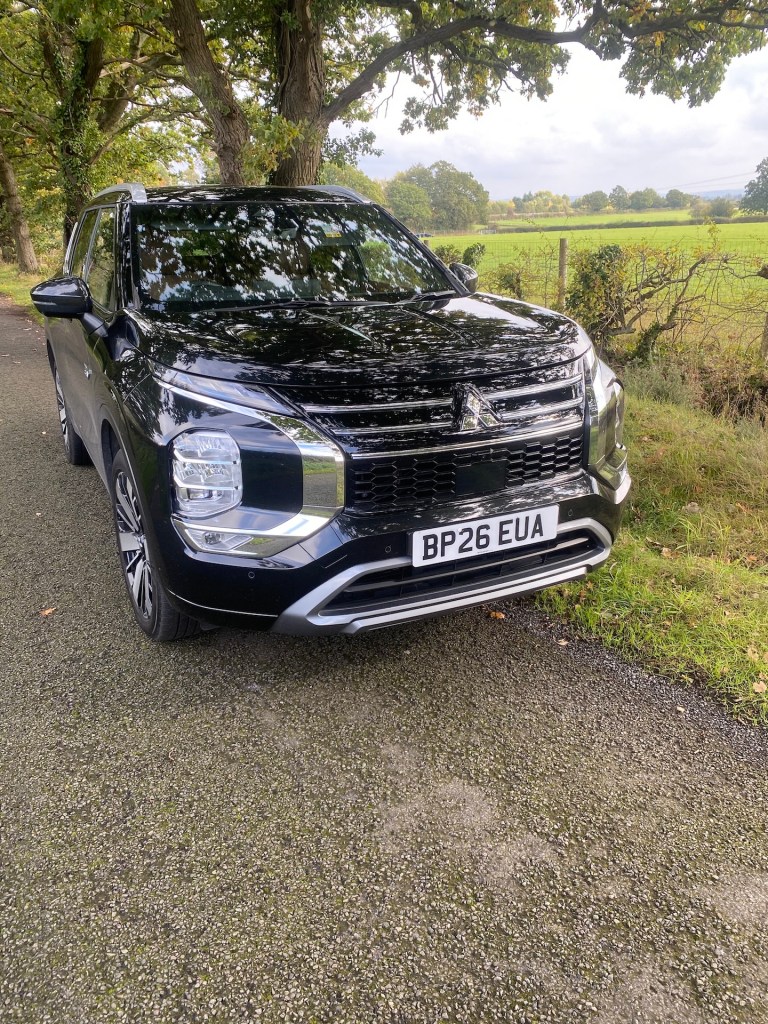
With this latest version, the signature boxy shape is familiar but sleeker – still bold and rugged, with huge light clusters. It looks like a vehicle designed to feel substantial without being flashy.
The front now features a smart grille and bumper set-up, and the whole car uses LED lights, including T-shaped rear lights that make it easy to recognise at night.
What you get for the money
There are two models: the entry-level seven-seater Nativa, priced at £46,995, and the range-topping Diamond, driven here, which is five seats only at £49,995.
The Nativa is still an excellent, hugely practical seven-seater in basic form, with decent off-road capability and a towing capacity of up to 1,600kg.
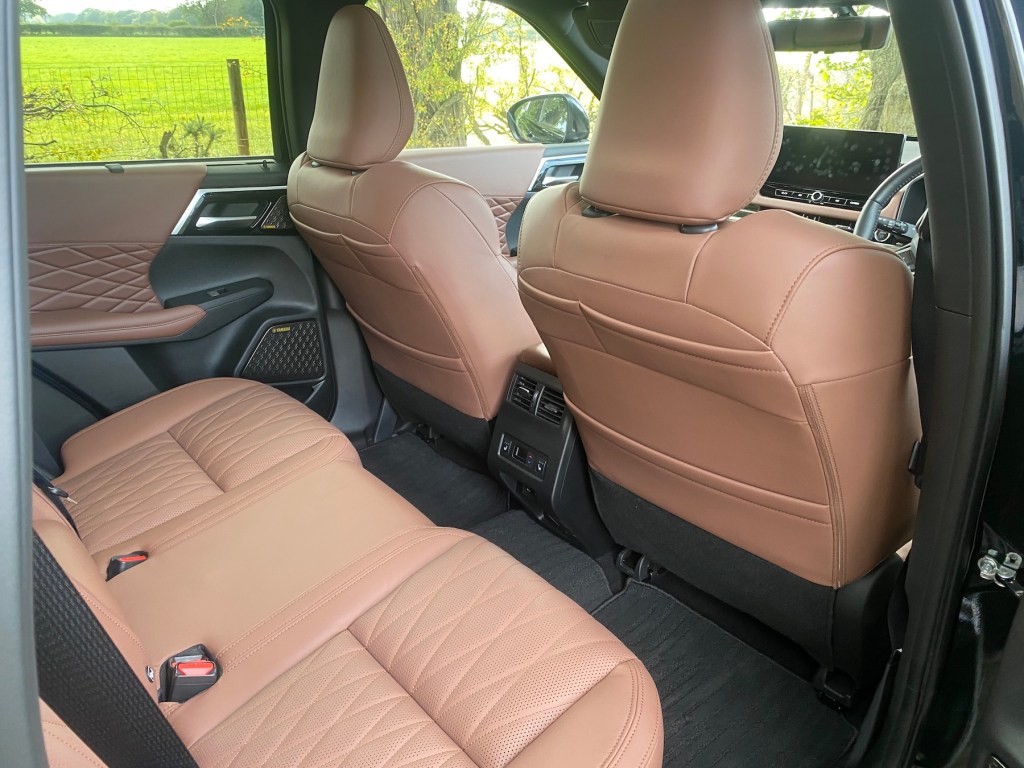
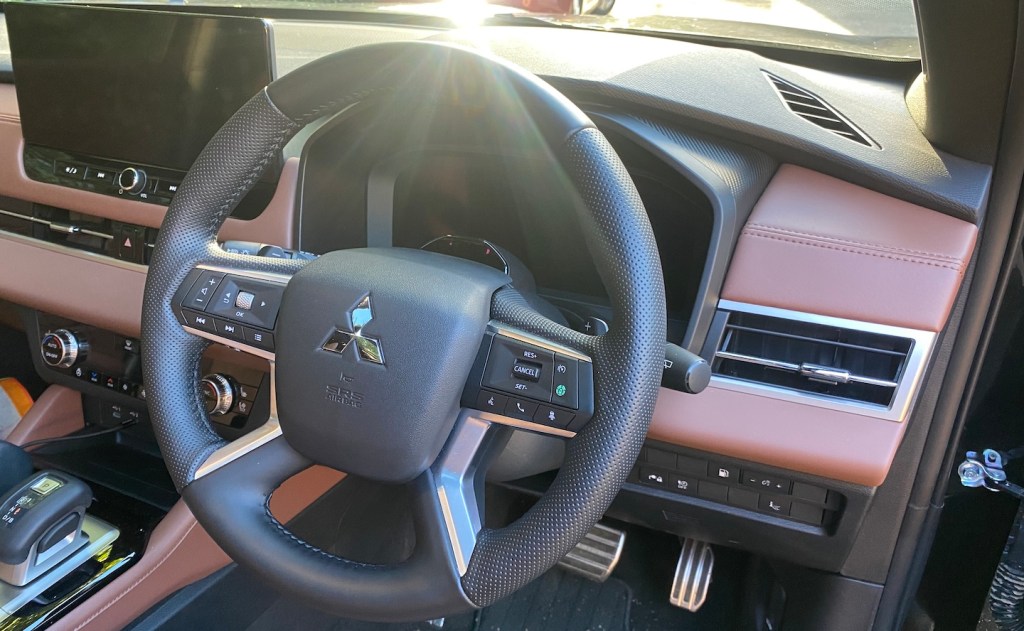
This tested Diamond model is well named, with a diamond motif features and high-end diamond-pattern leather upholstery. The Diamond is a real premium choice.
It needs to be at approaching £50k. It is around £3,000 more than the entry model, at £49,995, but it ups the ante with ventilated and massaging seats, heated rears, three-zone climate, a full-length panoramic sunroof and a host of other extras.
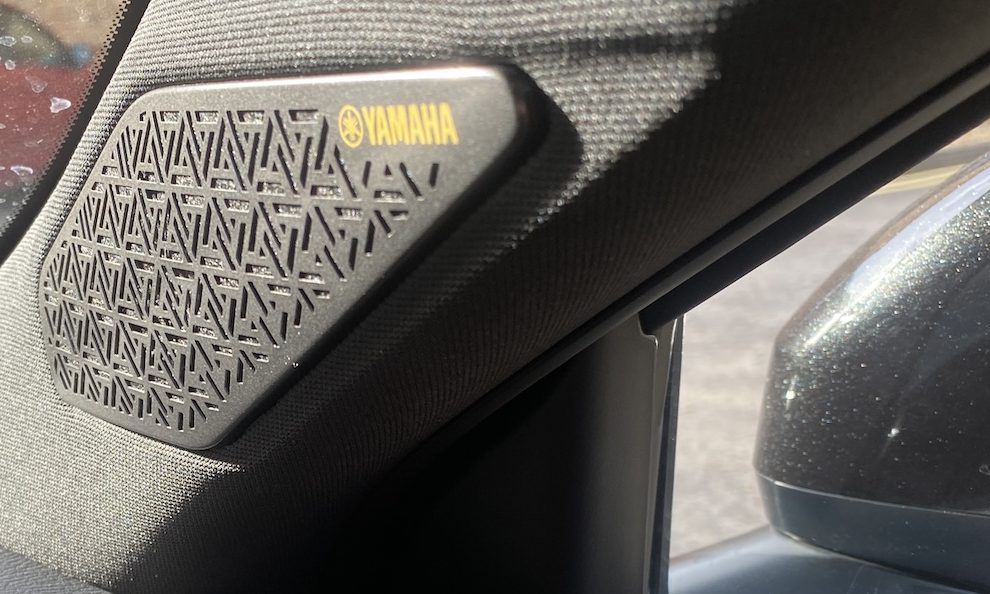
The car’s brain is a central screen that controls smartphone connectivity, apps, navigation and an infotainment system that includes a high-end Yamaha 12-speaker sound system. It has a clever mixture of touchscreen and physical controls lacking in many SUVs, and everything feels substantial and well put together.
The Outlander is exclusively plug-in hybrid at the moment– a 2.4-litre PHEV system with twin electric motors and all-wheel drive. This produces a combined 302bhp, with a 22.7kWh battery allowing substantial electric-only running for daily commutes.
The official WLTP electric-only range is 53 miles. The petrol engine acts primarily as a generator for the battery, which supplies the dual motors. It kicks in to top up the battery or boost performance under harder acceleration – though at a cost to overall fuel economy.
The Outlander has a claimed total range of over 500 miles on a full tank and full charge, but in mixed driving which saw the petrol engine kick in quite a lot, I saw a maximum of around 35mpg. Not bad for something this size, but plug it in daily for maximum fuel economy.
Safety
Standard kit includes autonomous emergency braking with pedestrian and cyclist detection, blind spot intervention, lane departure prevention, rear cross traffic alert and a driver monitoring system.
Front cross traffic alert and a centre airbag are also part of the package.
Space and practicality
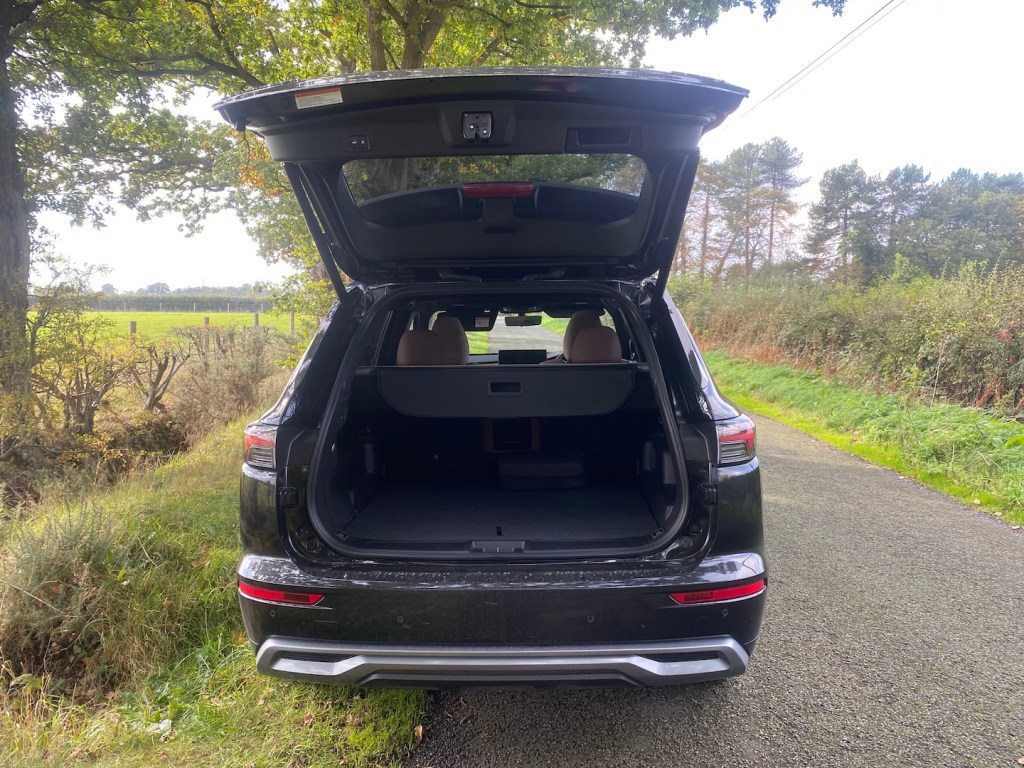
The deliberate seat sacrifice in the Diamond model allows for a storage capacity of 498 litres with the seats up. With all seats folded, capacity expands to 1,602 litres.
For convenience, there is a ‘kick’ facility to open the boot hands-free, and a 12V socket in the boot are thoughtful touches.
On the road
On the road, the Outlander is a pleasant place to be, offering, for the most part, silent running, with only the occasional sound of the dual motors. This I discovered on an extended journey around Shropshire and North Wales, with a rewarding driving experience.
The engine is vocal when it kicks in, though by no means overwhelming, and there is some road noise from the large alloys. However, the ride is smooth, even if the big beast does wallow a little on corners.
It’s not likely to be taken off-road very often, but the on-demand four-wheel-drive system allows extra grip in poor conditions, with a central dial allowing selection of systems to cope with anything from snow to mud and gravel.
Verdict
The Outlander is a sensible choice – genuine seven-seat practicality in basic form, a premium cabin and strong electric-only running in Diamond spec, all wrapped in a distinctive, rugged design.
Accept the five-seat trade-off and the Diamond delivers a genuinely luxurious PHEV for the money, backed by a warranty that few rivals can match. Don’t forget to plug it in!
Factfile
- Model: Mitsubishi Outlander Diamond PHEV
- Price: £49,995
- Mechanical: 2.4-litre 302bhp petrol engine and 22.7kWh battery driving twin electric motors
- 0 to 62mph: 7.9 sec
- EV range: 53 miles (WLTP)
- Total range: 500 miles plus
- CO2 emissions: 20g/km
- Insurance group: 47D
- BiK rating: 10%
- Warranty: 8 years / 100,000 miles inc battery

