
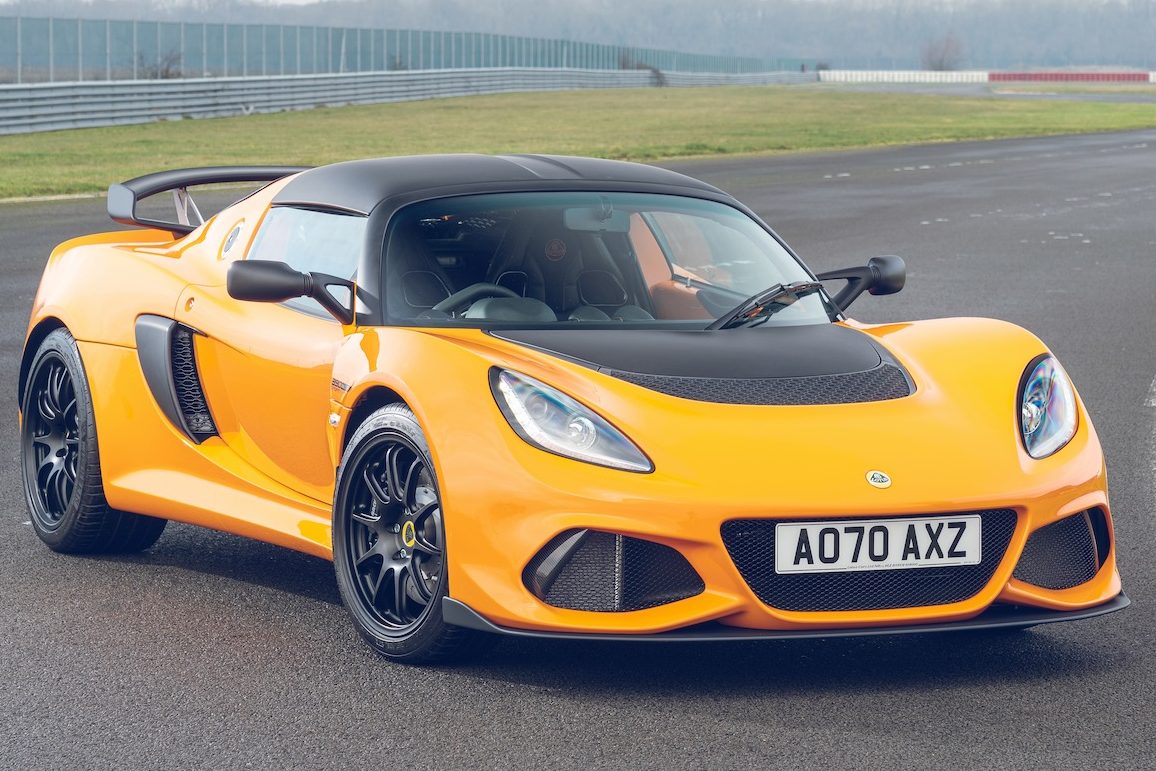

Iconic Lotus models get special treatment
By Bill McCarthy
Iconic is often used to describe cars, but few in reality deserve that status. Lotus most certainly does. Small in production numbers, but virtually universally recognisable, they are true drivers’ cars.
The Norfolk-based manufacturer is saying farewell to two models with limited editions of the Exige and Elise, so you can add rarity value to iconic in this case.
Both models have been around for more than 20 years and are bowing out with a bang.
Iconic? Yes, and thrilling because both offer a stripped down, raw form of driving which enthusiasts love, even if you need to be a contortionist to slide yourself into the seats.
Once inside having navigated the large step down into the cockpit, you are seated low to the ground, go-kart style. But there is plenty of legroom and the new flat-bottomed steering wheel also help with ingress/egress, while the seats are surprisingly comfortable.
Push it towards the red line and the roar becomes more pronounced, while the 420Nm of torque means the car pulls beautifully in all gears.

Creature comforts are few and far between in pursuit of weight saving. Spartan, would be a kind way to describe it with aluminium dominant for dash, sills and exposed gear linkage and central tunnel. Soft touch finish is not for these models, with hard plastics prevalent, although there is some suede finish.
The Exige Sport 390 Final Edition is a real supercar, offering blistering performance and a road presence that is hard to match and, as Lotus would say, has become the genre-defining definition of a race car for the road.
The Elise Sport 240 Final Edition is no less head turning than its sibling and says farewell after 25 years of gracing roads worldwide.

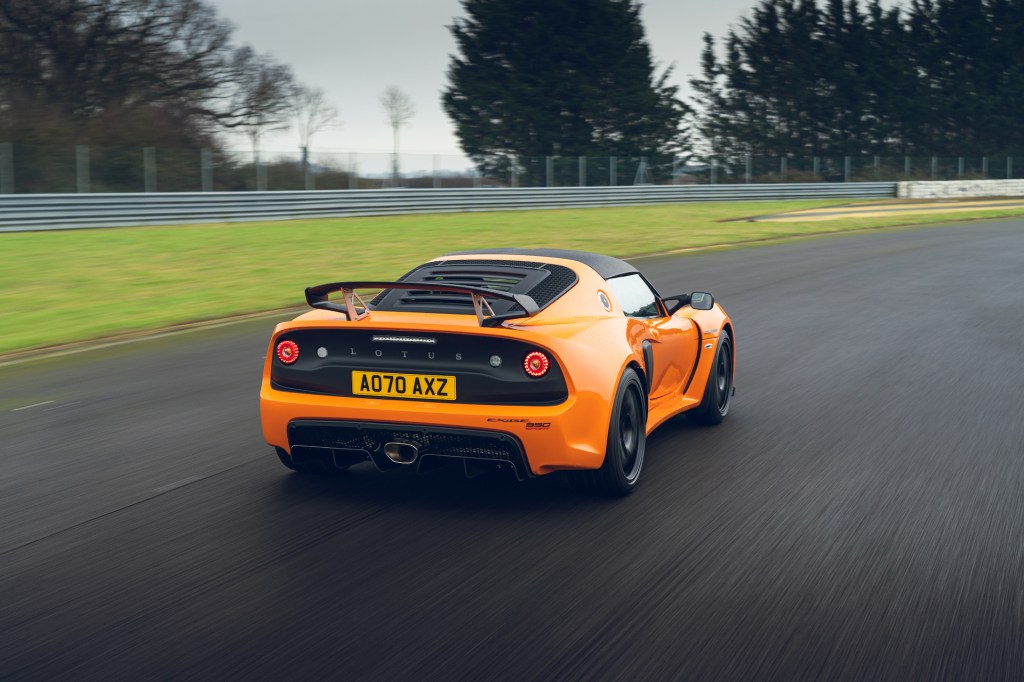

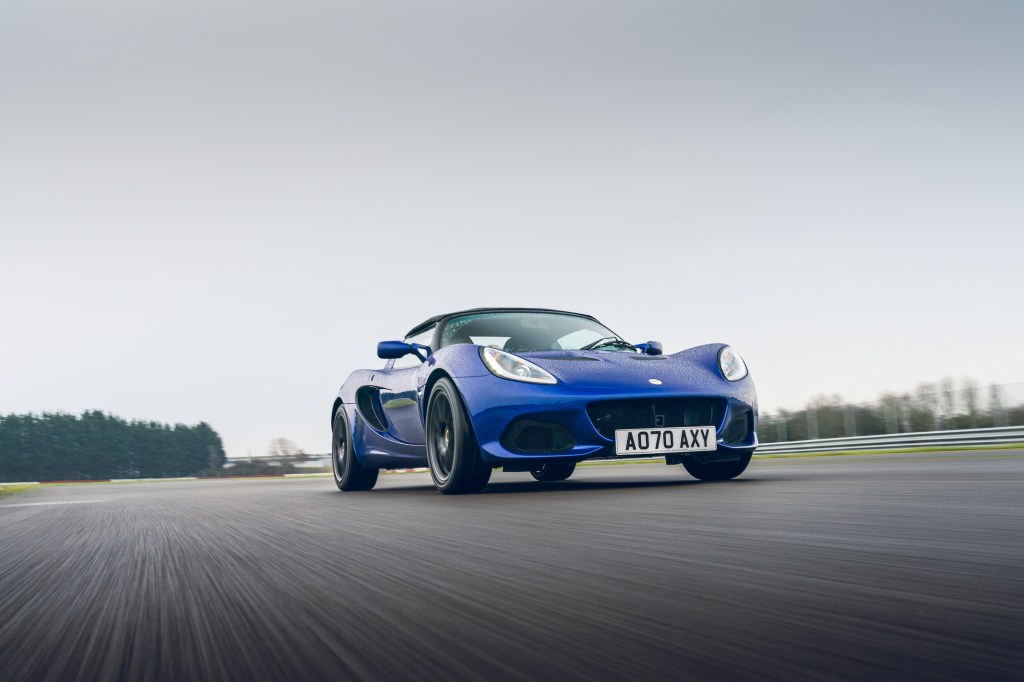
So what are the main differences? Both have stunning curvaceous styling and a choice of eye-catching, some garish, colour options, new exterior decals, lare air scoops, new wheel finishes and trim, but the Exige has a more raw, track-racing look, with its roof scoop and distinctive rear spoiler
Both are mid-engine and take advantage of their low-weight aluminium construction to offer stunning performance.
I perhaps got it the wrong way round driving the Exige first. Stripped down motoring it is with a 3.5 litre V6 supercharged engine mated with a slick shifting six speed box.
Muscle car might be a better description of this beast, with no power assisted steering and stiff clutch giving shoulders and left leg a workout before you’ve even got going.
Fire it up and it burbles calmly until you press the throttle and the roar and response is instantaneous. Acceleration through the 397bhp power unit is neck-wrenching, although care had to be taken on a wet road drive. Having said that, on long straight stretches, the car could be put through its paces.
The lack of power steering then really comes into its own as the driver gets superb feedback, feeling every inch of the road, while grip from the combination of 17 and 18-inch wheels front and rear, means it goes exactly where you point and at blistering pace.
Push it towards the red line and the roar becomes more pronounced, while the 420Nm of torque means the car pulls beautifully in all gears.
It can hit 60mph in around 3.5 seconds and on to a top speed of over 170mph. The kind of car built as much for the track as for the road.
The Elise 240, in comparison felt almost pedestrian. That’s if you can call hitting 60mph in just over four seconds pedestrian.
Powered by a supercharged and charge-cooled 1.8-litre, four-cylinder mid-mounted engine, it delivers 240bhp and 244Nm of torque.
Again response is instantaneous as you rip through the gears while the car clings limpet-like to the tarmac. It almost feels like power steering after the fat tyres of the Exige, 16 and 17-inch respectively here, but handling and steering feedback are superb.
For both cars, the excellent aerodynamics and spoilers produce huge downforce to keep both glued to the road, so wet weather could only slightly detract with what was a thrilling drive in both.
For their final farewell, both have come with what Lotus describes as the most extensive list of interior and exterior features, ever, which to be honest, aren’t that many, but that won’t matter for enthusiasts.
The biggest upgrade is the new TFT digital dashboard with the choice of two screens, one with a conventional set of dials and the other a race car-style with digital speed read-out and an engine speed bar and all with a Final Edition build plaque, plus new seat trim and stitch patterns.
Colours are split into two; Select, which includes Daytona Blue, Fire Red, Metallic Orange and Motorsport Black; and Heritage, which includes Racing Green, Nightfall Blue, Essex Blue and Calypso Red.
Five new variants of the two cars are the Elise Sport 240, Elise Cup 250, Exige Sport 390, Exige Sport 420 and Exige Cup 430. Lotus is anticipating high demand from global markets as customers rush to buy a slice of history. Prices range from £45,500 for the Elise to £100,600 for the range topping Exige.
Lotus owners, Chinese firm Geely are now joining the electric party with the 1,000bhp Evija hypercar set to hit the roads, while the new petrol engined Emira also on the way.
–


 On the road