
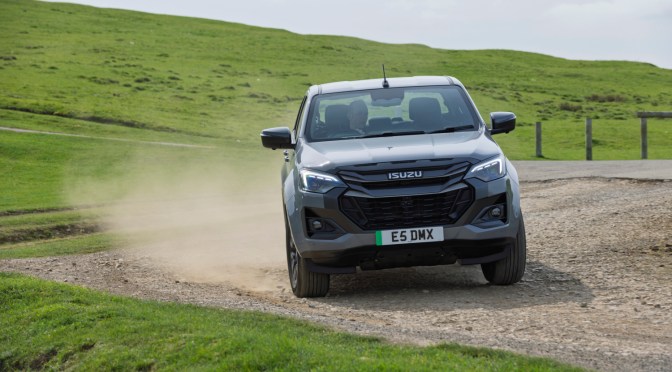
Isuzu D-Max eV-Cross
By Bill McCarthy
This electrified D-Max is a bit of a motoring paradox. It looks, works, and tows like the diesel pick-up it’s based on, yet glides along in near silence. The experience is slightly surreal — I found myself humming Simon & Garfunkel’s The Sound of Silence within the first few miles. Having driven many versions of the D-Max over the years, I found the absence of that familiar diesel clatter strange … and welcome – even though a new 2.2 litre diesel has joined the range.
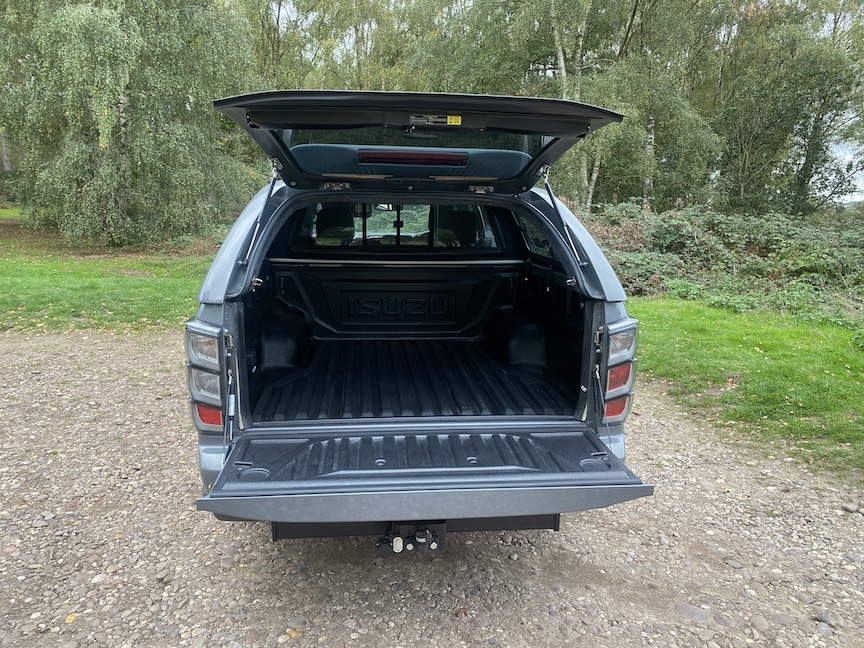
It is the first fully electric pick-up in the UK to offer over one-tonne payload, 3.5-tonne towing capacity, and permanent four-wheel drive, matching its diesel sibling. That’s proper capability.
All-wheel drive comes via a 66.9 kWh battery driving dual motors on the front and rear axles, producing 149.3 kW (roughly 200bhp) and 347.6 Nm of torque. Performance is rapid for such a big beast: 0-62mph in 10.1 seconds, about three seconds quicker than the diesel.
Impressive performance
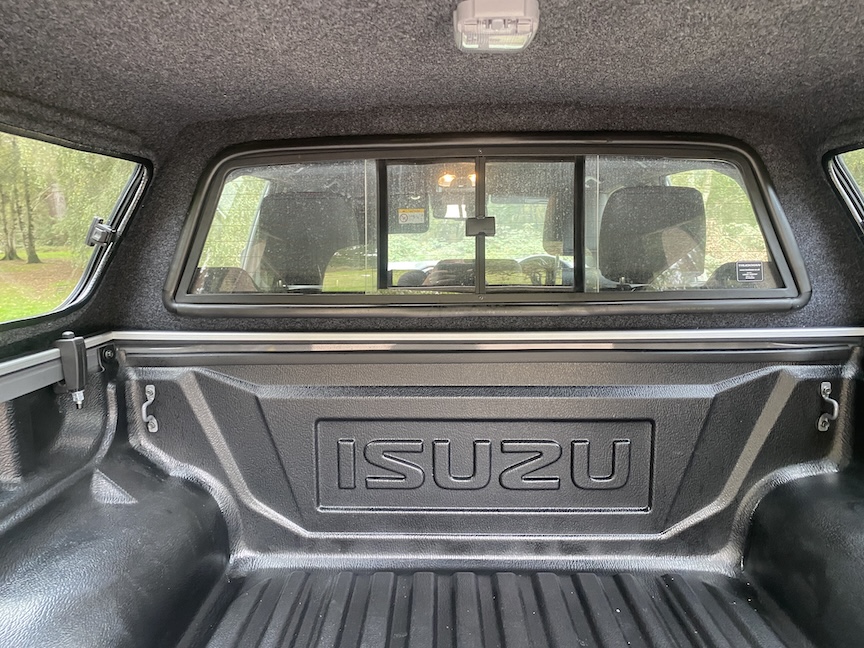
The big takeaway is how closely the EV matches the diesel’s capacity. It offers 1,015kg payload for the Double Cab (1,060kg for the Extended Cab) and a 3.5-tonne maximum towing capacity.
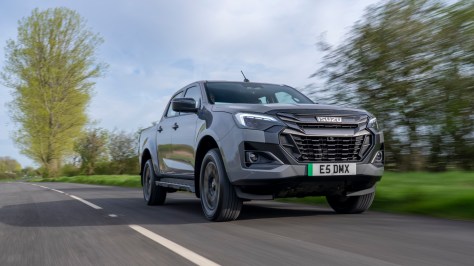
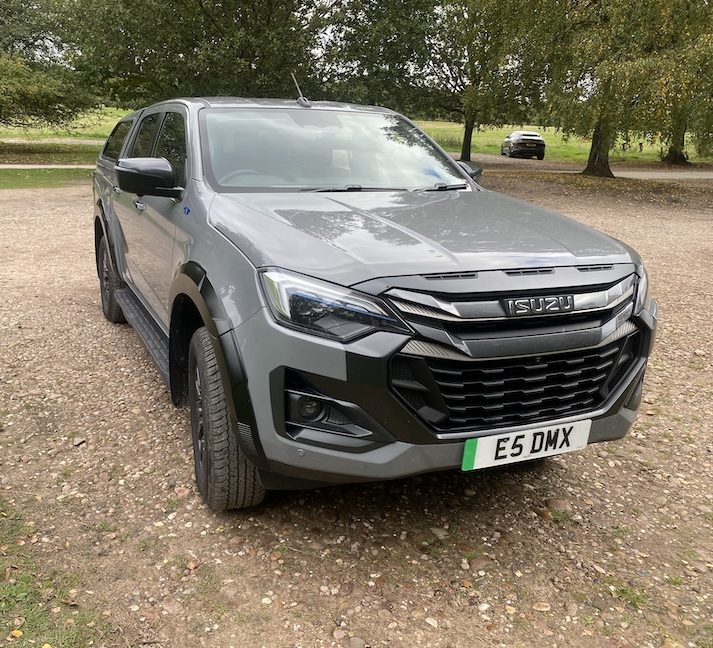
That qualifies it as a commercial vehicle, which means low Benefit-in-Kind tax rates for EVs.Visually, the range-topping eV-Cross tested here looks the part — muscular and practical, with some classy touches.
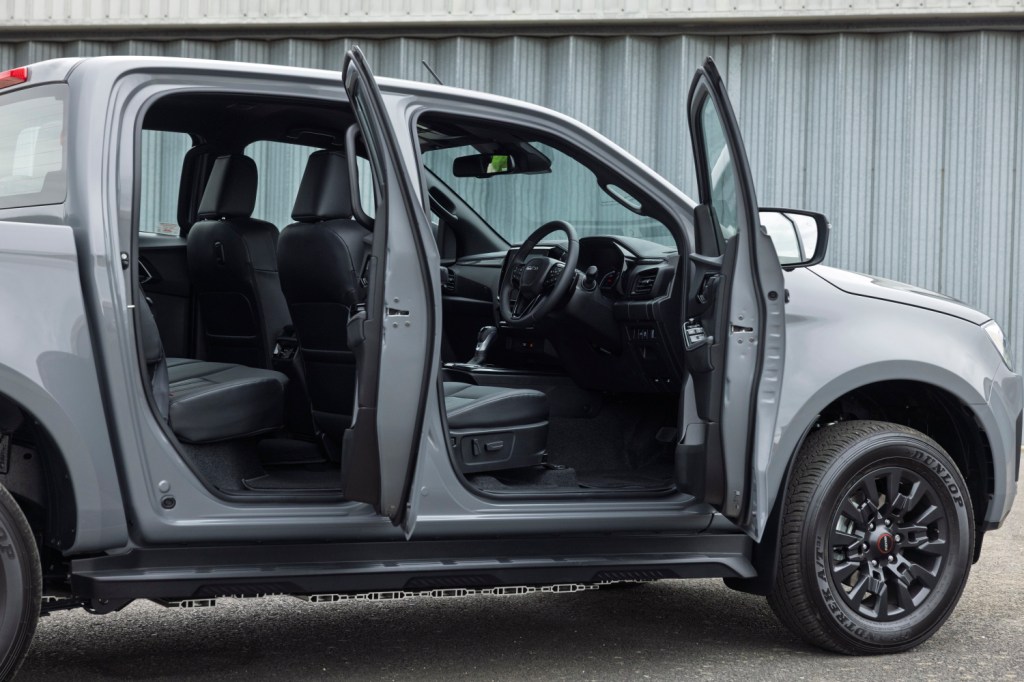
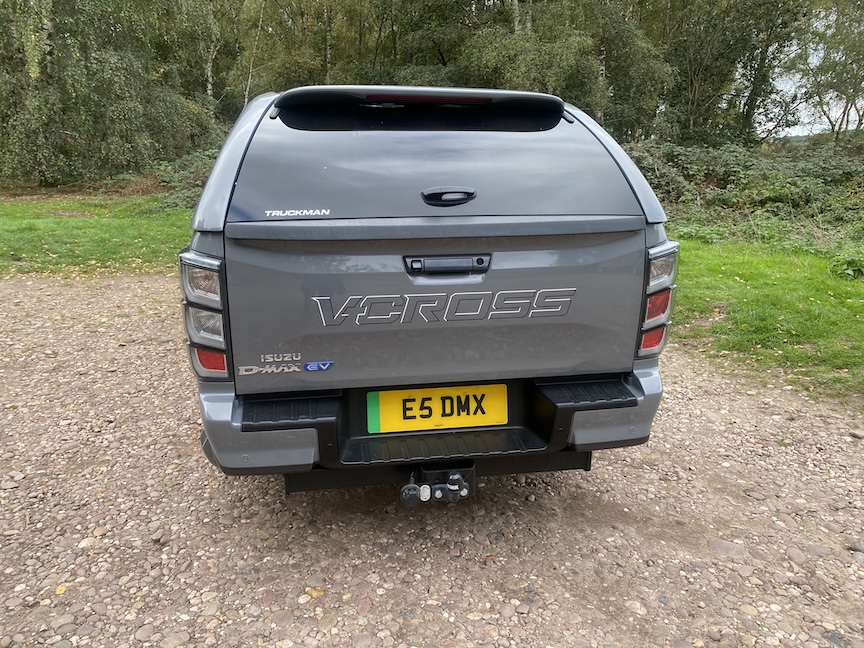
A new bronze-silver grille and Bi-LED headlights with blue accents. It sits on 18-inch alloy wheels with black side steps, honeycomb side vents, and an integrated charge port. At the rear are triple-shield LED lights, V-Cross/EV badging, and a battery protection plate.
The EV trade-off
Getting in, I initially thought I imagined that I felt lower to the ground than in the diesel — but it’s real. The EV sits 25mm lower (210mm versus 235mm ground clearance) because the battery pack is mounted beneath the floor, encroaching on the space under the truck.
Wading depth also drops from 800mm to 600mm.Isuzu says it has added underbody protection for the battery, but the lower stance is an unavoidable trade-off of the EV powertrain packaging.
I couldn’t judge how this affects off-road performance, though Isuzu says the EV has already been trialled in left-hand drive with National Grid Electricity Distribution, testing it in the most challenging UK terrains and conditions, including towing and winching.
Interior and equipment
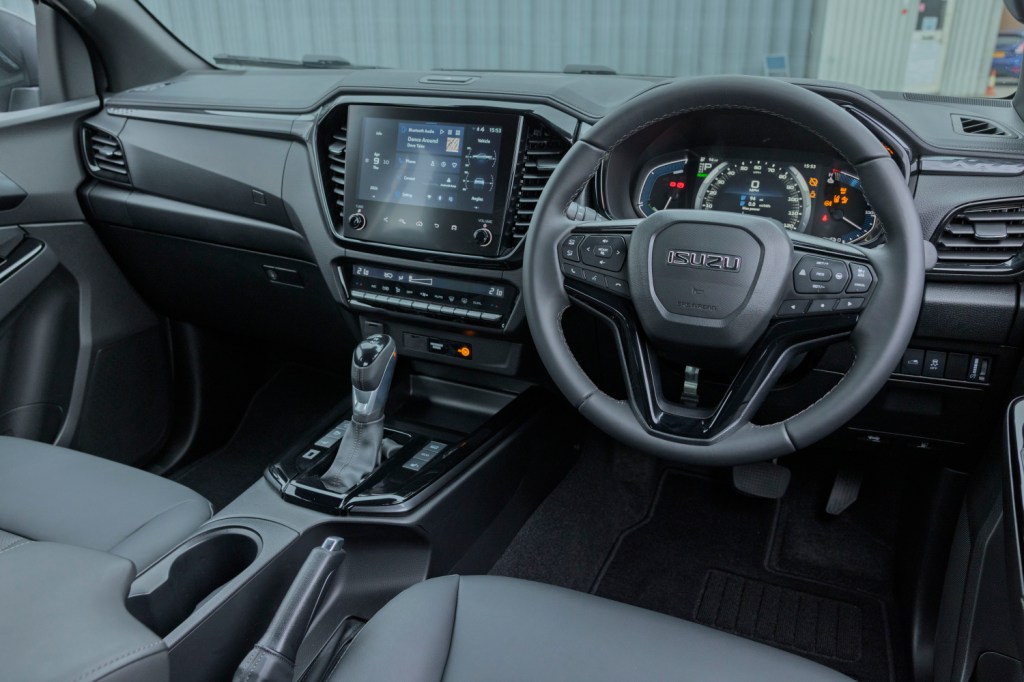
Like many modern pick-ups, the D-Max EV drives almost like a car, and the interior trim follows suit. Available in leather or high-grade cloth, it comes in eDL40 and eV-Cross trim levels, both with either Extended Cab or Double Cab configurations.
Standard kit includes Rough Terrain Mode, dual-zone climate control, heated seats, front and rear parking sensors, a seven-inch driver information display, and an eight-year/125,000-mile battery warranty.
Range and charging
Range could be an issue for some buyers. Isuzu quotes a combined 163 miles, though city driving improves this to 224 miles — a figure I could not confirm. On a mixed motorway and country lane road test in fine weather, the quoted figure seemed accurate. How those figures would vary with maximum payload or towing, I couldn’t judge.
DC charging is slow by modern standards and peaks at just 50kW, meaning a 20-80% charge takes around 60 minutes. Standard 11kW three-phase AC charging, however, gives a full charge in 10 hours, which suits fleet users who can plug in overnight.
On the road
Dynamically, the D-Max EV is more responsive and quieter than the diesel, and rides well if still bouncy when unladen. Instant torque makes light work of overtaking and loaded acceleration, and the near-silent running — apart from a little wind and road noise — delivers a decent driving experience.
Advanced safety kit
The EV retains the same suite as the diesel, with advanced driver assistance systems including autonomous emergency braking, adaptive cruise control, lane departure warning, and blind-spot monitoring. Traffic sign recognition and rear cross-traffic alert are also standard.
Cost and warranty
It’s not cheap. The Extended Cab eDL40 starts just under £60,000 excluding VAT, the Double Cab adds £1,000, and the top eV-Cross tested here is £62,495. That’s pushing £20,000 more than equivalent diesel automatics and considerably more than the KGM Musso Electric.
The Musso is cheaper but doesn’t offer the same payload or towing capacity. Isuzu believes its unique payload and towing capacity will attract buyers.
Verdict
For fleet operators who need a workhorse with low running costs and can live with modest range, this EV could well be the answer. For everyone else — lifestylers included — the premium over diesel is a tricky one to justify.
It’s silent, capable, and expensive, but at its heart it’s still a very capable D-Max.
Fastfile
Model: Isuzu D-Max EV eV-Cross Double Cab
Price: £62,495 (excluding VAT)
Mechanical: Dual electric motors, 66.9 kWh battery, permanent four-wheel drive, automatic transmission
Max speed: 80 mph
0 to 62mph: 10.1 seconds
Range (WLTP): 163 miles combined (24 miles city)
CO2 emissions: 0 g/km
BiK rating: 3%
Insurance group: TBC
Warranty: Five years/100,000 miles

