
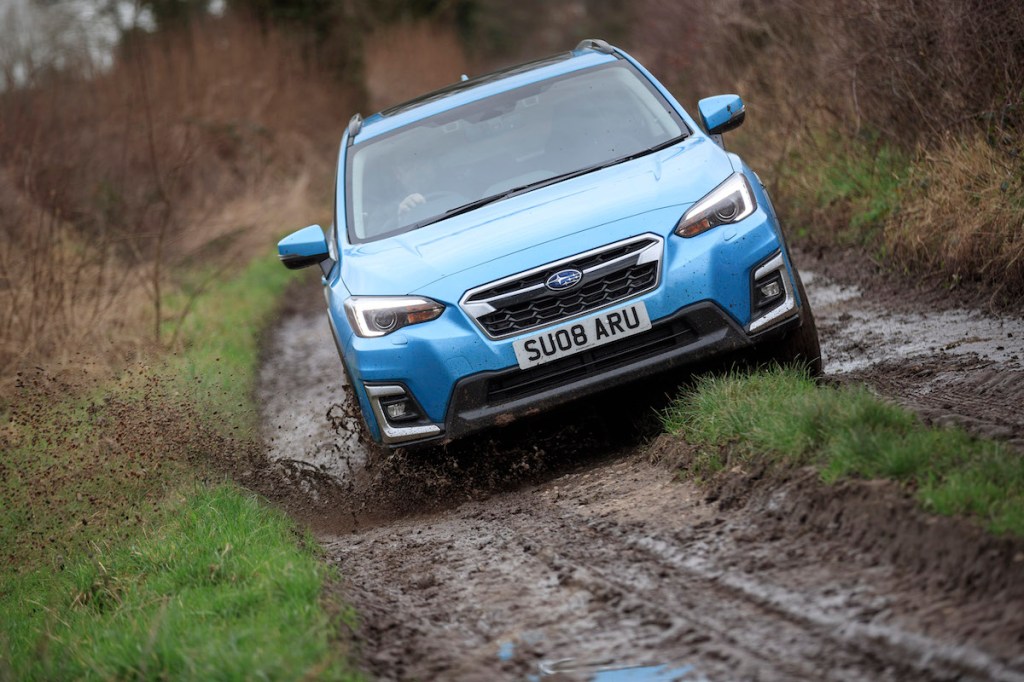
Subaru XV e-Boxer
By Bill McCarthy
The XV compact crossover was already a very capable, left field alternative to mainstream brands with its excellent Boxer engine and all wheel drive capability.
The latest self-charging hybrid version is built on Subaru’s Global Platform and has hi-tech additions including EyeSight driver assist technology and rear vehicle detection as standard and much improved economy and reduced emissions.
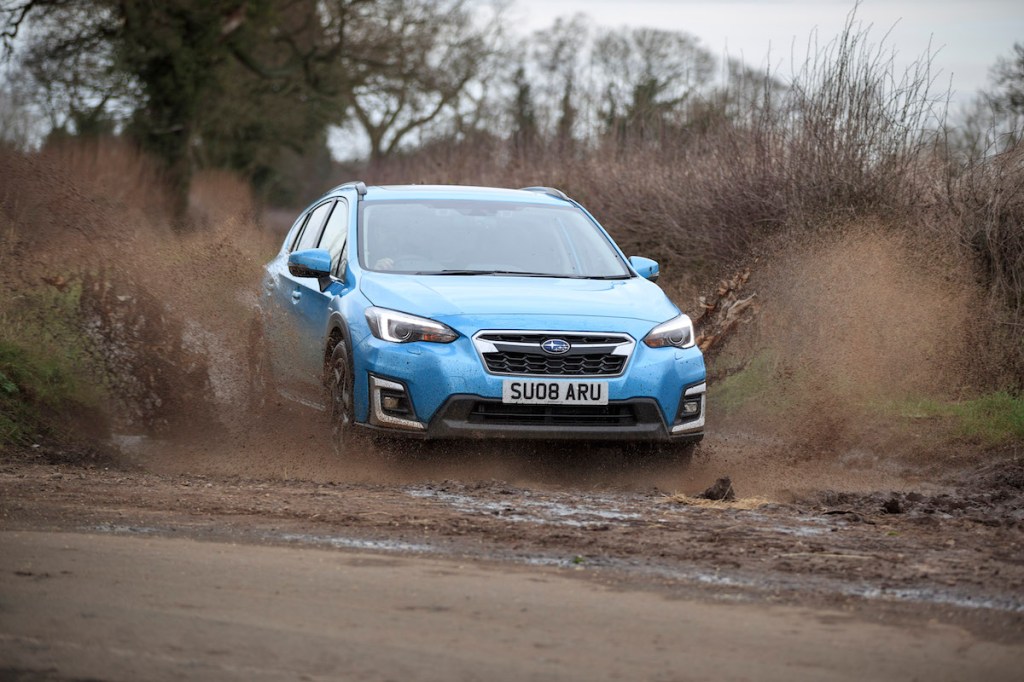
It will appeal to those who covet that off road capability, but with a saving in the running costs. And it is in places like fields, where with its higher ground clearance, it is likely to score for those inclined to pull trailers or horse boxes, but don’t want a full-fat mud plugger.
The two litre horizontally-opposed petrol engine has been mated with an electric motor and powerful lithium-ion battery which is mounted within the boot floor and allows for pure-electric driving at speeds of up to 25mph. The power plants are mated with the familiar Lineartronic transmission.
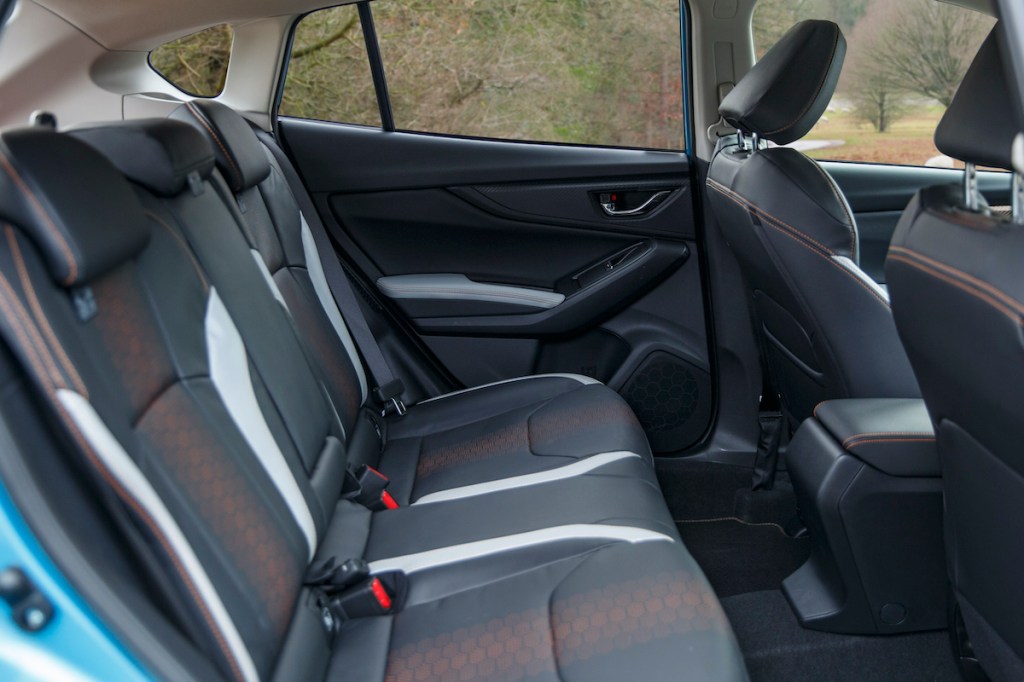
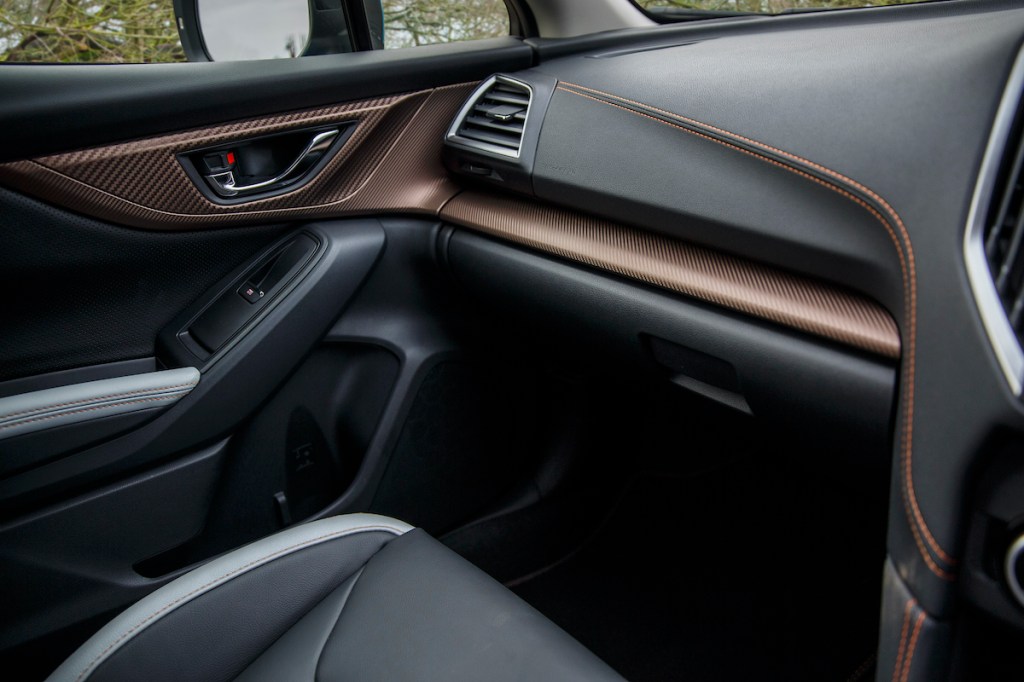
The interior is smart, with Subarus being more upmarket these days
The savings in fuel are not huge however and the electric only running only really kicks in in slow moving traffic. Economy is better but not stunningly so as the extra weight of the 4×4 technology and power of the engine brings the official figure to around 35mpg. I reckon I did a little better than that with careful driving and was nearer the 40mpg mark.
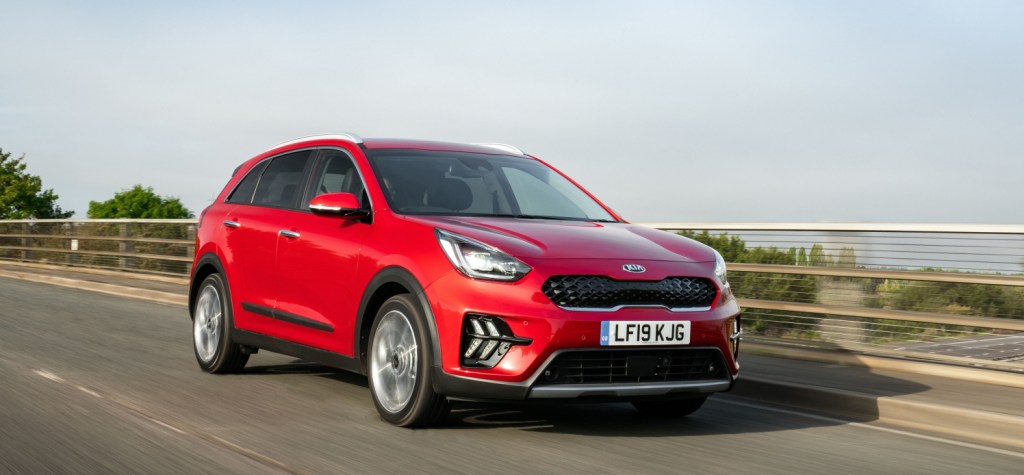
It looks the part with its mixture of curves and angles. It sports an hexagonal front grille, sloping profile with integrated roof bars, with new fog lamp bezel which surrounds the LED fog lights. The rear spoiler end plate is finished in gloss black and an e-Boxer badge has been added to the wings and tailgate. It sits on smart 18-inch alloys, standard across the range.
The interior is smart, with Subarus being a bit more upmarket these days. Not luxurious, but still fairly lavishly equipped with sporty styling, comfortable leather, powered, seats on this model, commanding driving position and good all round vision.
Centrally placed is an eight-inch multifunction colour touchscreen controlling major functions like infotainment, connectivity via Apple CarPlay and Android Auto, DAB radio and Bluetooth. Above this sits a screen displaying information on economy and driving data. A TFT information screen sits behind the steering wheel.
The SE is pretty well packed with standard kit, but this model includes dual zone air-conditioning, reversing camera and heated seats are also standard on this model as are eight-way power adjustable driver seat, satellite navigation and sunroof.
Performance is quite lively if you floor the accelerator, but the transmission becomes raucous under heavy acceleration. The vehicle can hit 60mph in around 10.7 seconds, with economy of around 35mpg.




This is because it is a heavy vehicle, with it its all-wheel drive, motor is placed near the vehicle’s centre of gravity and the battery is positioned above the rear axle. This improves handling but affects economy.
It handles pretty well despite its high ground clearance and is a comfortable motorway cruiser. The proven all wheel drive capability will not let you down in inclement weather conditions either.
In practical terms, it offers ample storage capacity and a towing capacity of 1,270kg, so you can pack it to the rafters for those offroad events that require trekking over muddy fields or rutted tracks. Boot space of 385 litres expands to 1,290 with the rear split seats folded.
Not the cheapest, starting at just under £31k, but it is packed with equipment and includes neat touches like the reversing camera displays a live colour image and head-up display for added safety. There’s also the five year, 100k miles warranty for peace of mind.
Its certainly worth expanding on the ample safety and driver assistance features which are standard. These include EyeSight driver assist technology functions optically using two stereo cameras which are mounted either side of the rear-view mirror. It monitors for hazards up to 110 metres ahead and includes: adaptive cruise control, pre-collision braking, lane departure warning and lane keep assist. Subaru Rear Vehicle Detection identifies vehicles approaching from the rear.
As well as the usual goodies you would expect on a vehicle of the price, standard kit includes LED lights, keyless entry and privacy glass on the rear windows and 18-inch alloy wheels standard across the range.
There are two trim levels, SE and this SE Premium model priced from £30,995 OTR.
Factfile
Subaru XV 2.0 SE Premium e-Boxer Lineartronic
Price: £32,140
Mechanical: 150PS, 1,995cc, four cylinder petrol engine driving and electric motor, driving four wheels via automatic gearbox
Max speed: 120mph
0-62mph: 10.7 seconds
Combined mpg: 37.9
Insurance group: 16E
CO2 emissions: 149g/km
BiK rating: 34%
Warranty: 5yrs/100,000 miles




 On the road