


Dacia Duster
By Bill McCarthy
The first Duster I drove was back in 2014 and then, as now, was blown away by, in the words of parent firm Renault, how shockingly affordable the SUV was, and still is, priced from £10,995 on-the-road.
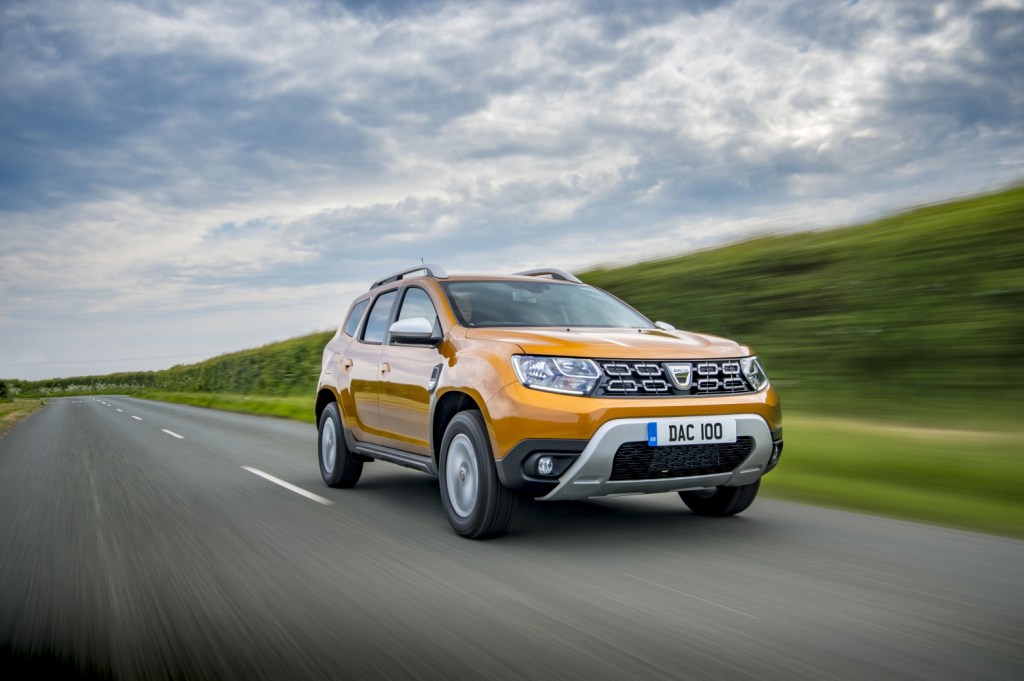
Revamped in 2017, not one body panel was carried over, but this has not led to the look of car being changed substantially.
The standard 17-inch wheels with black wing arch trims complement the distinctive lighting signature, which includes LED daytime running lights, while the windscreen is also steeply raked, which both creates a more dynamic look and let’s more light into the cabin.
Revisions included multi-view camera, power steering, keyless entry and ignition system, climate control and blind spot warning
There are now five trim levels available, Access, Essential, Comfort, Prestige and Techroad across a 16 version line-up, while there is a choice of three TCe engines and one dCi diesel.
All are packed with kit, with this just above mid range model featuring rear parking camera and sensors, electric front and rear windows, heated and electrically adjustable door mirrors and a seven-function on-board computer, all as standard.
As an SUV with either two or four-wheel drive, you might expect that a budget type vehicle would be pretty dull and utilitarian looking , but the Duster more than holds it own in this segment.
It sits high off the ground, with rugged stance featuring wide wheel arches, protective moulding 16-inch alloy wheels.
In addition there are front and rear skid plates, satin chrome door mirrors, side sills and scuff plates front and rear and satin chrome roof bars with Duster inscription
The 130bhp petrol unit driven here in is an impressive performer with excellent economy, aided by ECO mode and stop/start, good pulling power and decent acceleration which feels more rapid than the official 0-60mph figure of 11 seconds.



It is also a refined unit, with good torque that picks up nicely when accelerating on the motorway.
The SUV profile means it won’t be the most slippery through the air, and wind noise does intrude at times as does some road noise. Although Dacia says noise has been halved compared to its predecessor by increasing the percentage of sound-absorbing surfaces in the cabin and engine compartment from 20 to 50 per cent, together with thicker glass for the front windows.
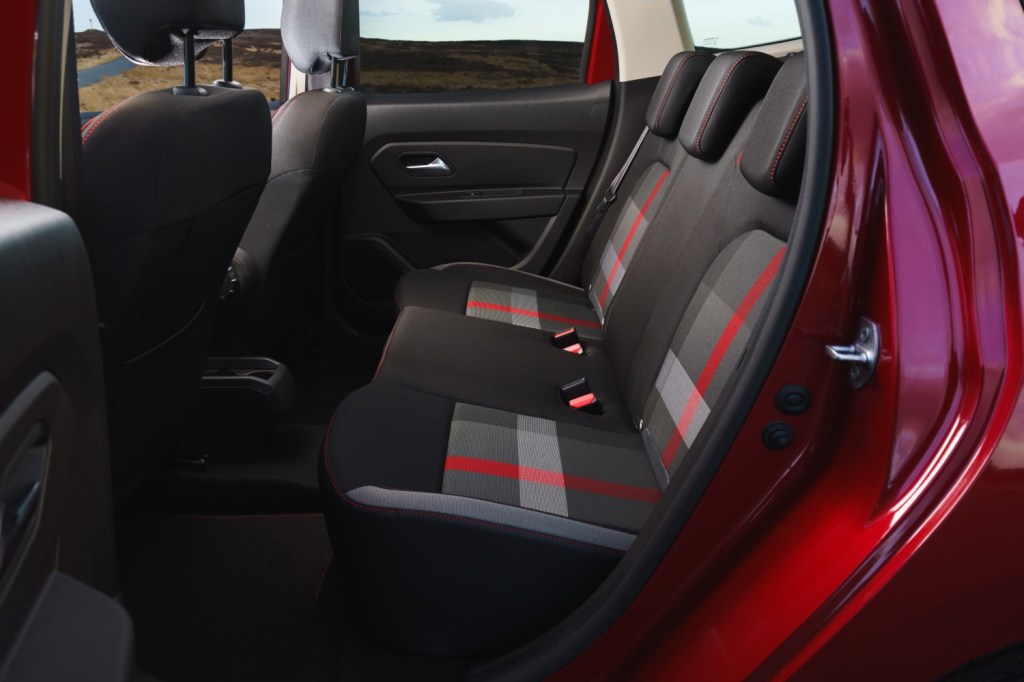
The interior trim is functional rather than luxurious with sturdy plastics rather than the soft-touch variety and hard-wearing upholstery.
It looks to be built to stand up to the strains and stresses of family use with large rotary controls and on this model multi-function steering wheel, as well as some older Renault-looking radio controls.
The brains of the car, however, is very hi-tech with the seven-inch touchscreen which controls infotainment, navigation and smartphone connectivity via Apple Carplay and Android Auto. Bluetooth is also available
Interior space is impressive with seating for five, while the boot offers up to 445 litres with the rear seats in place increased to 1,623 with them folded. Dont expect fantastic handling, it is and SUV, but it does feel surefooted enough with little wallowing on corners.
Safety kit is pretty comprehensive with blind sport warning, assisted braking, air bags including curtain airbag and alarm.
For those who prefer tackling the rough stuff, the Duster carries over the same off-roading credentials that helped to make the previous model such a success.
Dacia may still be suffering from brand anonymity, but that is changing all the time with superb value for money products. ‘Shockingly affordable’ is about right.
Factfile
Dacia Duster Comfort TCe 130
Price: £14,995
Mechanical: 130bhp, 1,333cc, 4cyl turbo petrol engine driving front wheels via 6-speed gearbox
Max speed: 118mph
0-62mph: 11.1 seconds
Combined mpg: 39-42mpg
Insurance group: 14e
CO2 emissions: 139g/km
BiK rating: 30%
Warranty: 3 years/60,000 miles


 On the road