
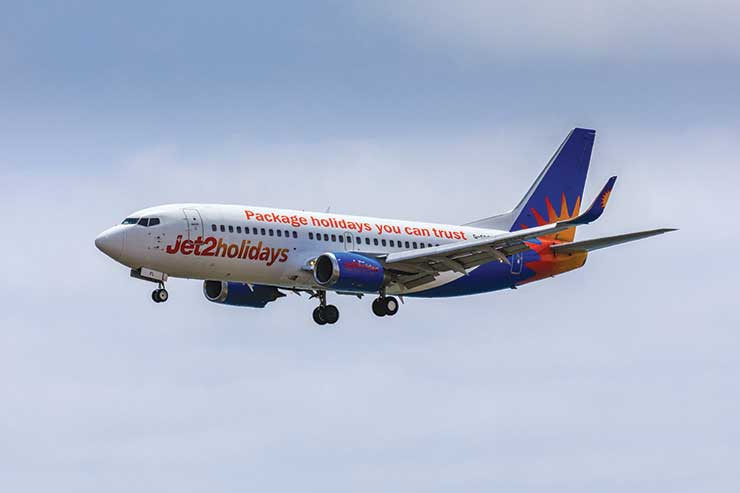
A leading airline has warned that its winter capacity for 2020/21 will be halved as a result of the Covid pandemic. Jet2.com and Jet2holidays chairman Philip Meeson expects the airline and operator’s winter capacity to be half that of last year owing to the ongoing effects of the coronavirus crisis.
Jet2 placed around 80 per cent of its UK staff on furlough during the six months to 30 September
The business this month disclosed a pre-tax loss of £119.3 million for the six months to 30 September, down from a £337 million profit during the same period last year.
Operational profit, meanwhile, fell from £365.1 million to a £111.2 million loss during what Jet2 described as a period of “unprecedented operational and financial challenges” during which it was forced to ground much of its fleet from mid-March through to mid-July.
“Few could have foreseen the prolonged impact of the pandemic,” said Mr Meeson. “Jet2 plc has adapted quickly to the challenges by taking considered, but decisive actions to bolster liquidity, minimise losses and reduce cash burn.”
Mr Meeson said Jet2’s “disciplined approach” to flying capacity, which involved focusing on profitable routes and bringing them to market quickly when travel restrictions permitted, had allowed the business to deliver a better result than forecast back in mid-May.
Looking ahead to the winter, Mr Meeson said he anticipated winter 2020/21 seat capacity would be approximately 50 per cent less than winter 2019/20, adding with travel advice uncertain, forward bookings would likely continue to come with a “pronounced” shorter lead time than in previous years.

He added that while recent positive news of a potential Covid vaccine was welcome, Jet2 would continue to take a cautious approach to summer 2021 with seat capacity close to summer 2019 levels.
“As is typical for the business, further losses are to be expected in the second half of the financial year as we ready ourselves operationally for the proposed summer 2021 flying programme,” he added. “In addition, the ability to fly in the short term remains uncertain, as UK government guidance currently restricts international travel except in limited circumstances until at least 3 December.”
Jet2 plc’s half-year report reveals the extent of the business’s efforts to preserve liquidity and control cash burn: it placed around 80 per cent of UK staff on furlough under the government’s Coronavirus Job Retention Scheme, and tapped similar schemes for overseas workers; froze recruitment and discretionary spending; and cancelled 12 summer-only third-party leased aircraft.
Staff were also asked to take a pay cut, while performance-related bonuses for the year ending 31 March 2020 and the firm’s discretionary colleague profit share scheme were not paid.
Passenger numbers, though, fell from 10.07 million in 2019 to just 0.99 million on an average load factor of 69.0 per cent, down from 93.1 per cent. However, Jet2’s proportion of package holiday customers increased as a percentage of those who did travel during the six months to 30 September.
On refunds, Meeson said Jet2 had taken “great pride” in refunding customers promptly, and paid tribute to the airline and operator’s virtual contact centre, customer service and social media teams for their “tireless” work, which he added was duly recognised by the CAA in its airline refund investigation.
He added that while recent positive news of a potential Covid vaccine was welcome, Jet2 would continue to take a cautious approach to summer 2021 with seat capacity close to summer 2019 levels.
 On the road