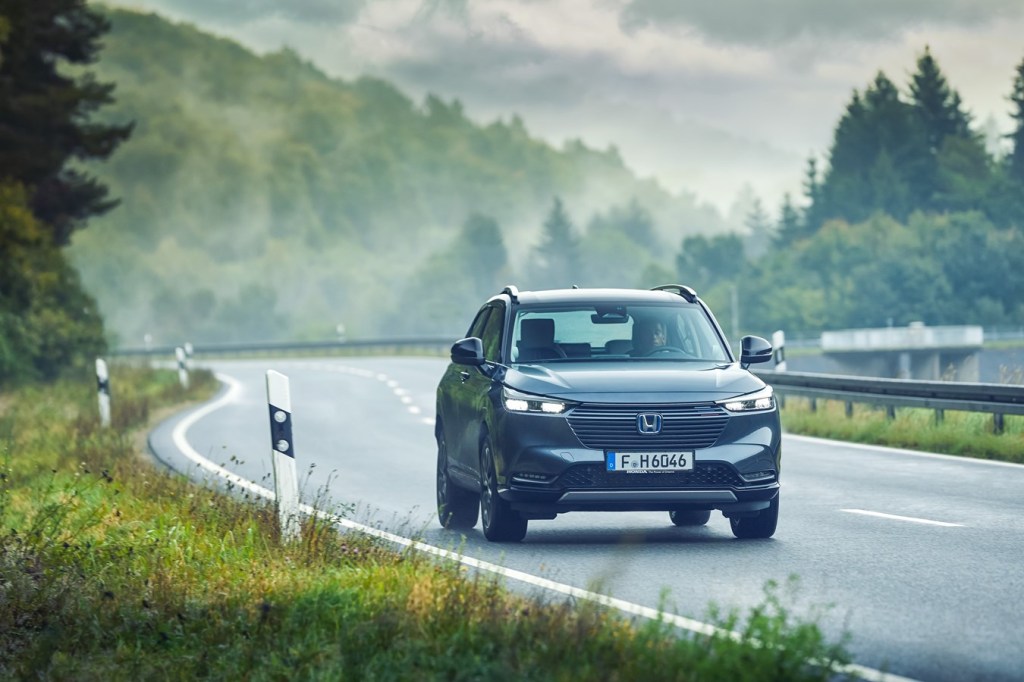
Available in Europe from late 2021, the new HR-V is the latest model in Honda’s line-up to wear the e:HEV (hybrid electric vehicle) badge, following the refreshed CR-V and all-new Jazz that launched in 2020. It expands Honda’s electrified line up as the brand moves further towards its goal of electrifying all of its European mainstream models by 2022.
Yoshitomo Ihashi, 2GN Large Project Leader, said: “We carried out group discussions with people of varying backgrounds, from many fields of expertise and across all ages and genders. This has helped us add elements which will bring fun and joy to all passengers. We have sought to augment, not repress people’s individuality and create a car that enables occupants to enjoy their lifestyles.”
The all-new HR-V has a contemporary coupe-SUV body that appeals through the simplicity of its design, while its exceptionally spacious and versatile interior is more user-oriented and comfortable to sit in. This compelling combination owes much to Honda’s compact, integrated powertrain technology and the centre fuel tank layout.
The result is class-leading interior space, as well as unrivalled flexibility thanks to the versatile Magic Seats that offer both ‘fold-flat or ‘flip-up’ options depending on the cargo space required.
As with the exterior, the spacious interior has a solid, premium SUV feel, but with contemporary fabrics and soft-touch materials. The modern, minimalist aesthetic is created by the horizontal sweep of the instrument panel and uncluttered lines and surfaces throughout. The feeling of airiness and space is elevated by a new air diffusion system that creates a curtain of fresh air beside and above passengers, flowing from unique L-shaped vents positioned in the top corners of the dashboard.
Intuitive and seamless in-car connectivity features and apps, which introduce a new level of technology to Honda’s compact segment SUV, can be accessed via touchscreen or via voice activation.
Featuring the most comprehensive suite of advanced safety features and driver aids in its class, the Honda HR-V is fitted with active and passive Honda safety technologies designed to make driving both easier and safer.
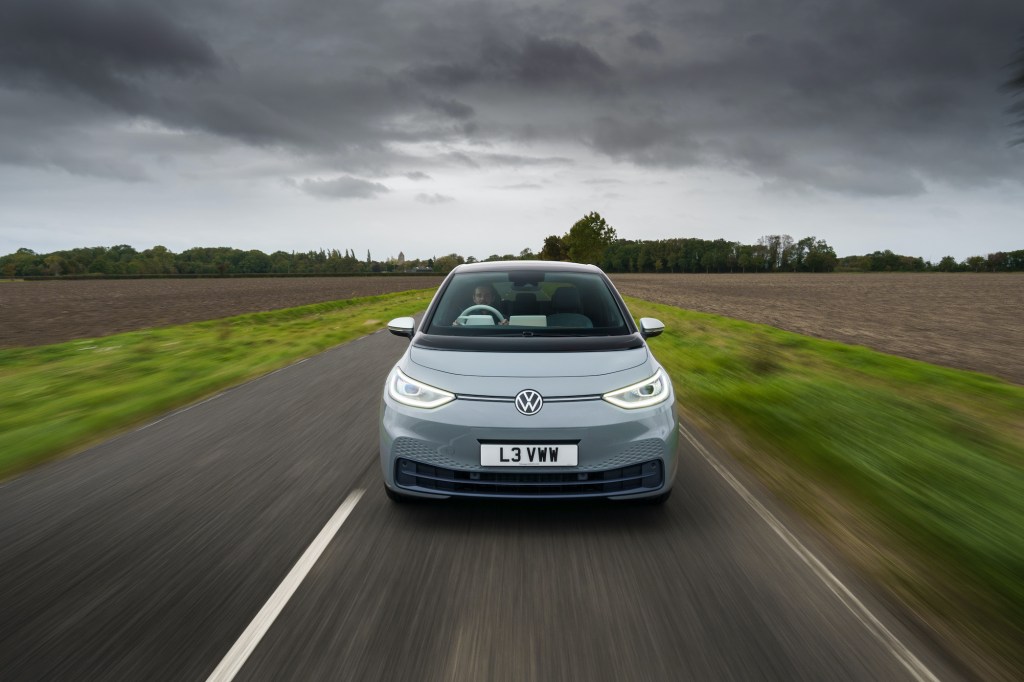
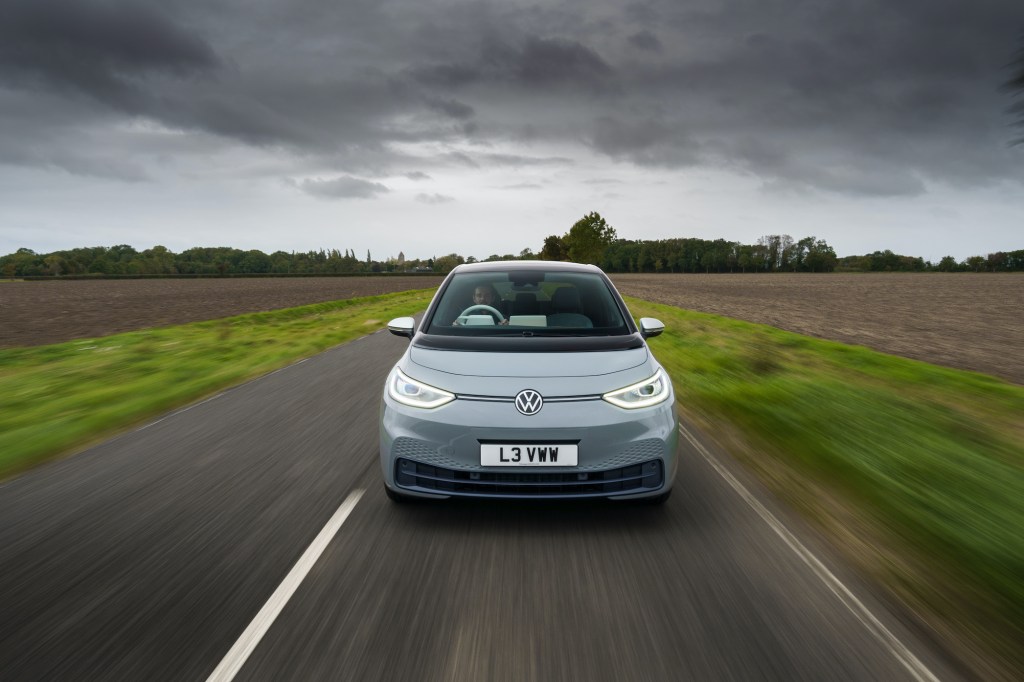
VOLKSWAGEN has high hopes for the stylish ID.3. A slightly odd name for a car VW hopes will emulate the iconic Beetle and Golf, to become a third major chapter in the history of Volkswagen. No pressure then.
It is their first purpose-built electric model and built on their new modular platform, the MEB, on which, by 2029, VW hopes to sell around 26 million electric vehicles.
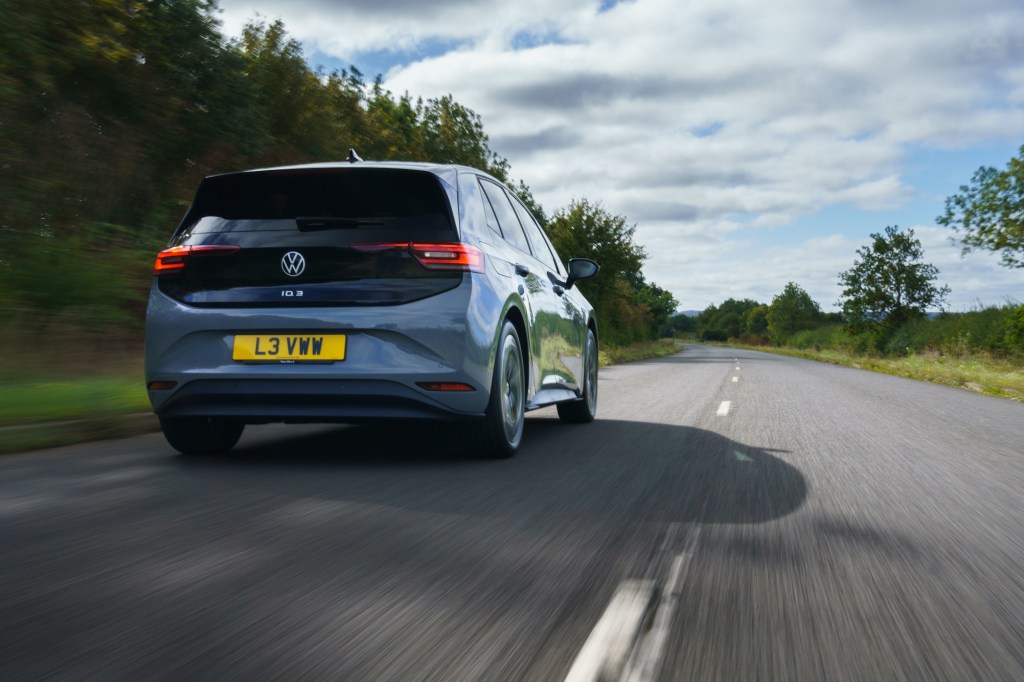
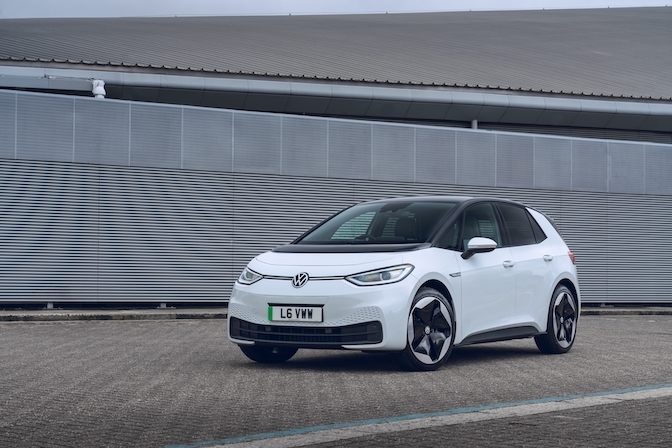
Again, no pressure. So it’s new but it’s very much a VW, with eye-catching styling and, well, just being a VW. Electric cars are no longer immediately distinguishable from their combustion engined siblings and, unsurprisingly, this does have the look of a Golf, but is rear wheel drive with the motor and gearbox situated at the rear axle. Think of the original Beetle.
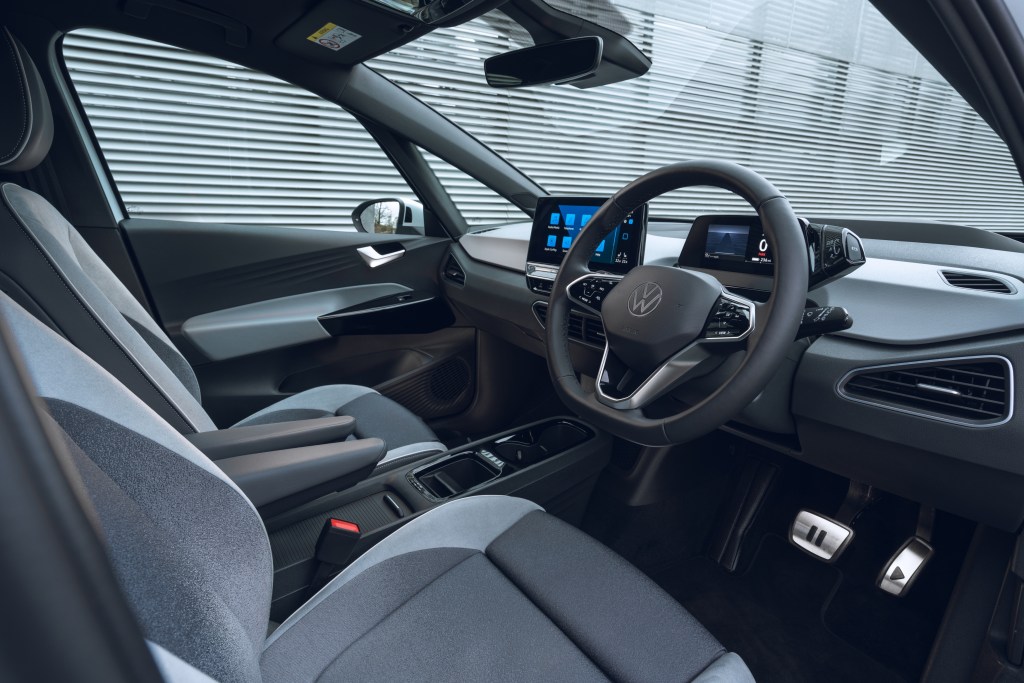
It looks stylish with swooping, coupe-like lines and a smart but slightly minimalist interior which now uses a combination of touch controls and voice commands for the majority of functions. The car also features clever light animations that respond to voice commands.
The MEB platform, says VW, allows different-sized batteries and offers a similar footprint to the Golf, but interior space comparable to a Passat. Clever, or what?
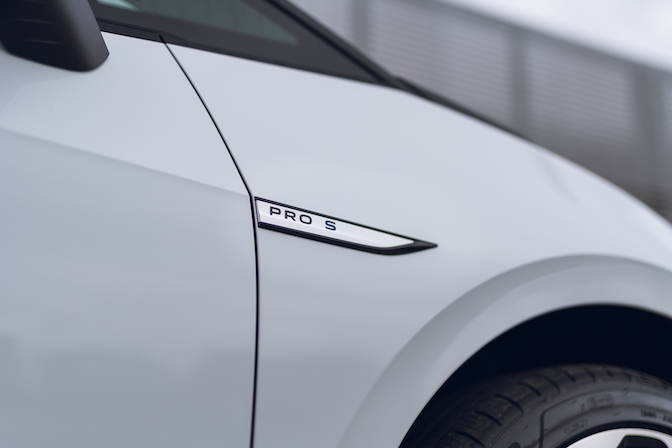
Like all electric cars, it offers swift acceleration from a standing start and choice of three batteries of Pure, Pro and Pro S specification. Trim levels include Life, Style, Family, Max and Tour. They are 45, 58 and 77 kWh power units and the claimed range for each is 216, 264 and a whopping 340 miles, all but negating range anxiety that has been prevalent with electric cars.
Prices are now ever more competitive with the first ID.3 available in the UK for under £30,000 (including the plug-in vehicle grant).
This model was the range-topping Tour with the 77kWh battery and mega range.
All are well equipped and this model included goodies like heated seats with integrated armrest and height adjustment, heated steering wheel, interior ambient light with a choice of 30 colours and split folding rear seats with headrests plus the usual array of electric and electronic driver aids.
It looks the part with exclusive efficient alloys, dominant LED matrix headlights, daytime running lights and contrasting black roof and hatchback which features a small spoiler.
The interior is impressively roomy, with large glass areas and little instrument clutter. The gear selector, a rocker switch, is just behind the steering wheel, and the lack of a handbrake lever means there is plenty of space between the front seats. It proved a boon when I had to climb across from the passenger seat when someone had parked too close to the driver’s door.
A bit like the Tesla, a central console dominates and handles major functions, like connectivity and navigation and is aided by the Hello ID intelligent voice control which can handle infotainment and climate control.
There is another five-inch display behind the steering wheel which gives immediate driver information. In addition strip light which runs beneath the windscreen flashes up different colours and responds to voice inputs.
On the road it is a versatile car, a composed motorway cruiser, and, with its low centre of gravity a fun car to drive with plenty of grip on offer when accelerating into corners. It is quick off the mark, hitting 60mph in just over seven seconds.
As a compact family car it needs to be comfortable and the suspension offers a composed and comfortable ride. Pottering around town the car is simplicity itself, with nicely weighted steering which gives a good turning circle for easy parking.
You can select two drive modes, D for normal and the energy recovering B mode, which allows the car to slow down while regenerating energy at the same time, improving the greater range.
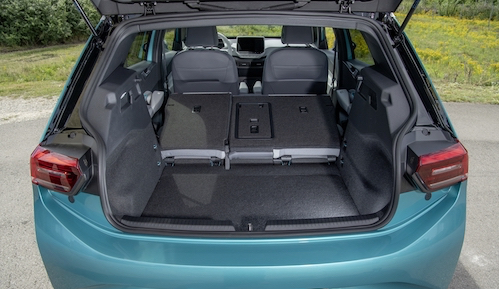
As a family hatchback it must be practical and offers decent boot space of 385 opening up to 1,267 litres with the seats down. And plenty of other cubbies and storage spaces available for nick racks.
VWs are packed with safety kit and the ID.3 the full range of airbags, traction and stability control and assisted braking, together with a range of traffic and pedestrian warnings.
Factfile
Volkswagen ID.3 Tour 77kWh Pro S 204PS
Price: £38,815
Mechanical: 207bhp/150kWh, electric motor driving rear wheels via CVT transmission