

BMW M440i Gran Coupe
By Bill McCarthy
When it comes to producing compact performance coupes, BMW has few peers. Stylish, desirable, pricey and offering, blistering performance together will all-wheel drive technology, there’s a huge amount to like, although this model will set you back north of £53k.
It’s not perfect, no car is, but it comes close. It gives a whole new dimension to the phrase ‘hot hatch.’, with its four-doors, hatchback and brutal pace.
The BMW M440i xDrive Gran Coupé, has a rather grand sounding name and no, doesn’t refer to shoehorning your gran into the car.
There are small things I am not keen on, like the flush door handles that can be fiddly in the rain and I am unsure about the larger kidney grille. Actually though, I think I like it.
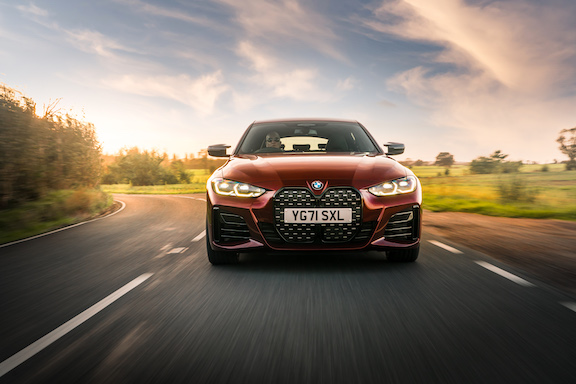
But it is a striking looking motor, with predatory stance, sweeping profile with short overhangs, cat’s eye type light cluster and that black honeycomb grille flanked just below by huge air scoops finished, like the grille, in high-gloss black.
An M-specific spoiler on the boot lid rounds off the distinctive appearance, as does the performance brake callipers painted in blue and the striking alloys.
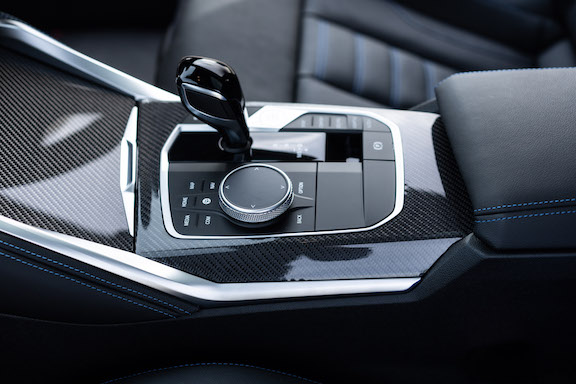
BMW describes the interior as a driver-centric cockpit, the dash layout is familiar with the central touchscreen, while a sport leather steering wheel also controls various functions.
The classy leather interior is finished with neat blue stitching, while soft touch finish abound throughout the car offset with contrasting metal inserts.
There are five seats with three full sized to the rear which, despite the compact look of the car, offer decent legroom and reasonable headroom.
Controls are logical and intuitive with the familiar iDrive operating system linked with a central screen and 12.3-inch high-resolution instrument cluster behind the steering wheel.
The central screen controls, infotainment, navigation and connectivity for smartphones, with built-in SIM card with 4G LTE connectivity and BMW’s Connected Package Professional enabling remote digital information services.
It is pretty practical, being a hatchback, with 470 litres of boot space up 39 litres on the previous model, which can be expanded to a maximum of 1,290 litres while the hatchback features an automatic opening and closing mechanism.




There are various petrol and diesel models available, but the M version is all about performance and it doesn’t disappoint.
Powered by a three-litre, six cylinder turbo-charged engine it delivers blistering pace, hitting 60 mph in under five seconds, while the eight-speed automatic transmission slips seamlessly through the gears.
A mild hybrid system boosts electrics and adds to the engine power when required.
It is a thrilling experience to give it the full beans and all the while the adaptive M suspension works in the background together with the four wheel-drive to deliver maximum stability and a satisfying driving experience.
The driver can also select various drove modes from COMFORT, ideal for motorway cruising through to the most driver-orientated SPORT mode.
Here you get the full roar and the spitting and crackling from the exhaust as everything sharpens up and you can give the car its head on the open road as it powers through bendy, twisting roads with ease. All within the law of course.
As you would expect, this model features a comprehensive list of safety kit, with full complement of airbags, traction, steering aids as well as cruise control, front and rear parking sensors, lane-departure warning, automatic emergency braking and speed limit information.
FACTFILE
BMW M440i xDrive Gran Coupe
Price: £53,980
Mechanical: 374PS, 2199cc, six-cylinder, petrol engine driving all wheels via 8-speed automatic transmission
Max Speed: 155mph
0-62mph: 4.7 seconds
Combined MPG: 35.3
Insurance Group: 40
C02 emissions: 184g/km
Warranty: 3yrs/60,000 miles



 On the road