Jeep Wrangler
By Bill McCarthy
The influence of Jeep in the world of off-road, go-anywhere rugged 4x4s should not be underestimated. Made famous as a military vehicle seen racing around war-torn Europe and immortalised in many films, especially as John Wayne was winning the war, it inspired the designer of the Land Rover Series I, Maurice Wilks, engineering director of Rover cars, to come up with a British alternative in 1947.
Inspired by the Willys Jeep used by the Americans, Wilks wanted to create an off-road vehicle that could double as a light tractor – a tool as much as a mode of transport. And the copycat Land Rover was born. The rest, as they say, is history.
And while the Jeep has moved on in the last 80 years, the template pretty much remains the same. This fourth generation Wrangler is available as a two, or on this vehicle a four door together with various soft or hard top combinations.
This Overland model featured the modular Freedom, hard top which can be quickly removed and reinstalled, together with the Overland pack which includes 18-inch aluminium wheels, body colour grille with bright accent throats and headlamp bezels, body colour hard spare tyre cover and Overland logo dedicated leather interior and LED lights.
There is a choice of engines and this model packed plenty of punch with a two-litre, 272bhp turbo-charged petrol engine mated to an eight-speed auto gearbox, delivering stonking power and torque figures of 400Nm for impressive pulling and towing power. It is capable of pulling up to 1,500 kg on two-door models and 2,500 kg on this four door.
It is also pretty rapid on the road, hitting the 60mph mark in just over seven seconds. Hot hatch territory, but this is a vehicle that’s hardly designed for speed and handling.
A full-fat, in your face off-roader, there is little pretence at slippery styling, more a boxy battering ram than an aerodynamic thoroughbred. It may not be the most sophisticated or hi-tech of SUVs on the market, but it certainly does what is says on the tin and is one of the most striking. If not THE most striking, and rarely equalled offroad.
The four wheel drive offers permanent, high and low gearing and lockable differential, plus ground clearance of 10 inches, steep approach and departure angles and wading capacity of more than two-and a half feet.
It is an impressive rugged-looking vehicle, which for enthusiasts that is exactly what they want, except that now it is more sophisticated, comfortably doubling as family transport as well as Amazon explorer.



That must be the attraction to many buyers with its much friendlier road manners, which makes it a relatively smooth ride to previous Wranglers which bounced about all over the shop.
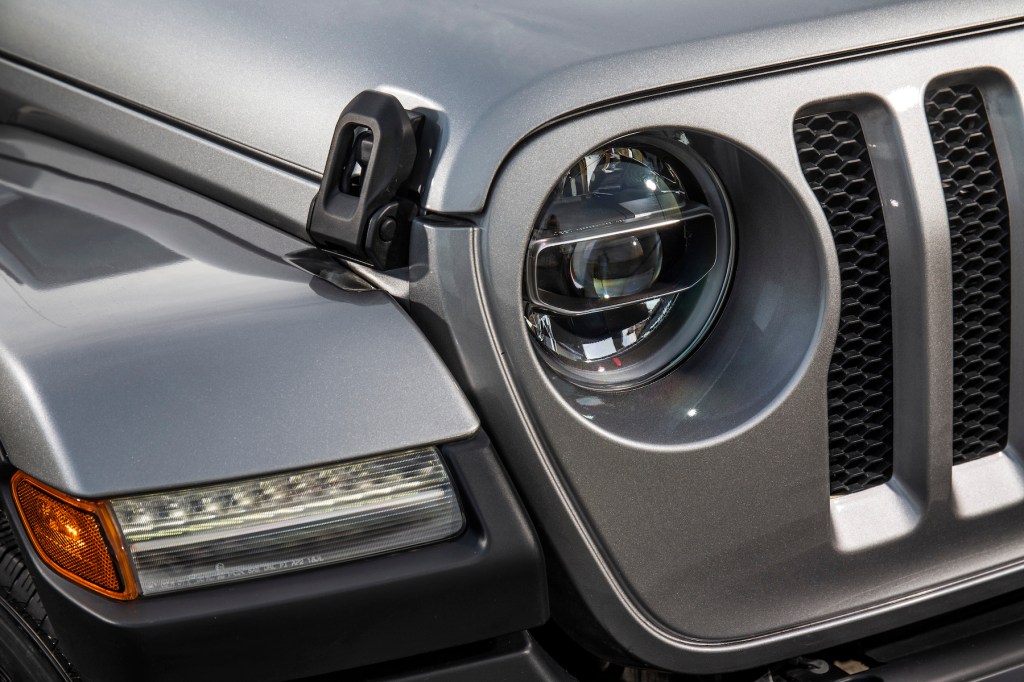
The road presence is unmistakable and desirable, with foldable windscreen, large tyres encased in huge wheel arches and the signature seven-slot grille, flanked by new self levelling LED halogen headlamps, plus front and rear fog lamps.
All Wrangler models now feature body-coloured sport bars, which are welded to the body and feature integrated grab handles.
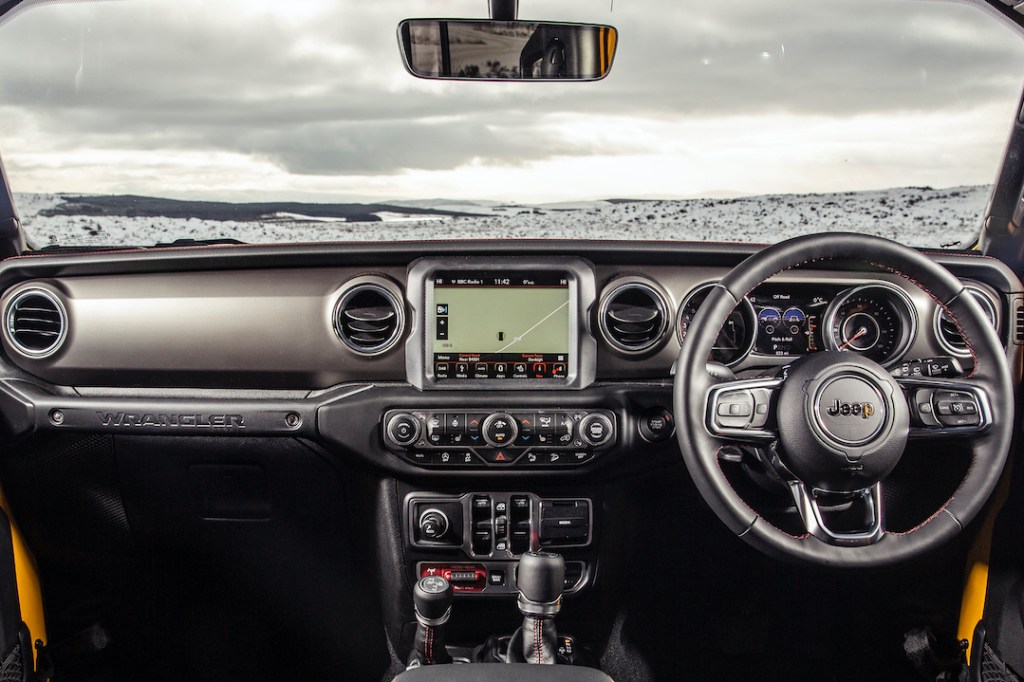
The interior too, is slightly deceptive, looking basic, but actually hosting many of the creature comforts you would want if spending £46k on a vehicle, including some soft-touch materials.
Making its debut is a push-button starter, featuring a weather-proof surround is easily located within the driver’s reach. The seats feature accent stitching, and now offer adjustable bolster and lumbar support. Available comfort options include heated front seats and steering wheel.
A centrepiece 8.4 inch touchscreen controls major functions like navigation, smartphone connectivity and eight-speaker Alpine audio system, plus there is a seven inch TFT instrument cluster screen for driver information.
Compared to other SUVs of a similar price, it lacks some of the refinement and state-of-the-art tech, but it’s hardly low tech and features, a push-button starter for the first time, heated, powered leather seats with the Overland logo, auto dimming mirror, steering wheel mounted audio controls, ambient interior lighting, heated front seats, climate control, illuminated front cupholders, plus various 12v power connectors.
Safety features include stability control, rear parking sensor and camera, four airbags, blind spot monitors, rear cross traffic detection and electronic stability controls with roll mitigation.
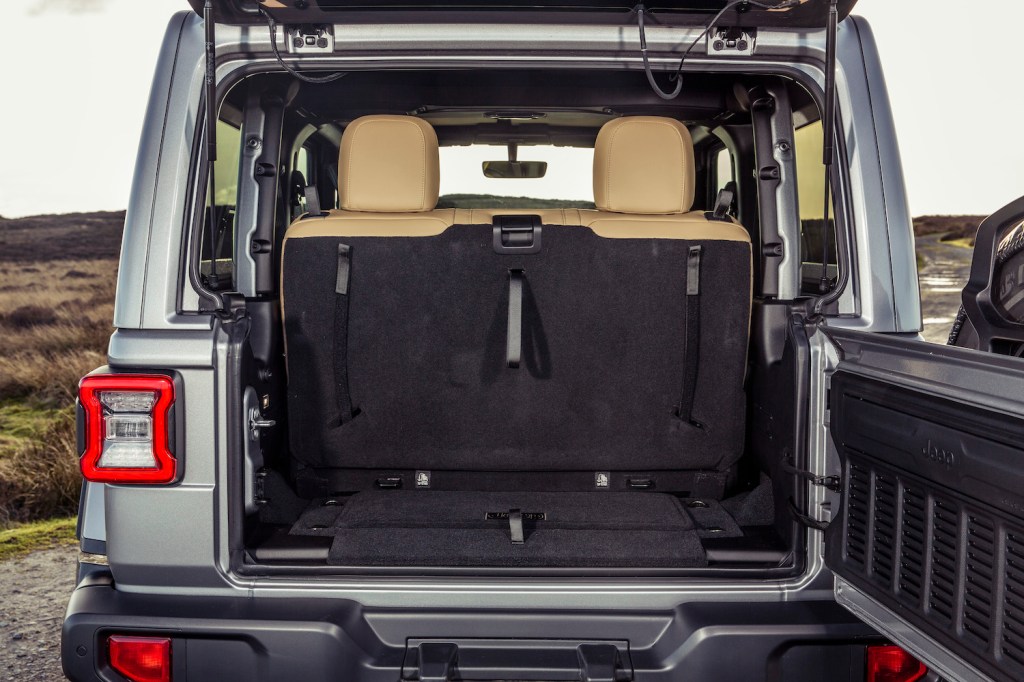
At around 16ft long, this is a big vehicle, both outside and in. A full five seater its shape means all have plenty of head and legroom, while a large boot space of 548 litres can be increased 1,059 litres by folding the rear seats. An under-floor storage area behind the rear seat provides extra, secure stowage.
A signature Wrangler characteristic remains, with washable interiors and the protective rubber cover for the infotainment system screen, that allows easy clean up in complete peace of mind.
Big and brash, but more sophisticated, if not class-leading, the Wrangler retains its legendary off road status, while becoming an engaging and attractive drive.
Factfile
Jeep Wrangler Unlimited Overland 2.0 four door
Price: £49,650
Mechanical: 1995cc, 272HP, four-cylinder petrol engine driving all wheels via eight-speed auto transmission
Maximum speed: 110mph
Acceleration: 0-62mph in 7.8 seconds
Economy: 24.8 mpg
Insurance group: 38
CO2 emissions: 260g/km
Warranty: Three years/ 60,000 miles
BiK rating: 39 per cent
Warranty: Three years/ 60,000 miles