All posts by Macfivenews

Motoring and travel journalist, opinionated gob on a stick

No switch for electric car owners

Less than 1% of drivers want a return to petrol or diesel


Drivers have taken to electric vehicles with a passion, with virtually none looking to switch back to internal combustion engines.

A new poll of Zap-Map’s community of electric vehicle (EV) drivers has revealed  more than 90 per cent of drivers will not be replacing their current EV with a petrol and diesel vehicle.

A spokesman for the RAC said the figures show the momentum that is behind getting drivers into electric vehicles, something that is likely to build as we move closer to the end of the sale of new petrol and diesel cars by 2030.

The results are strong evidence of the fundamental shift in consumer attitudes in favour of environmentally friendly cars. In the poll, which was carried out in November 2020 with over 2,000 respondents, 91 per cent said “no thanks” to replacing their EVs with a petrol or diesel vehicle; and in stark contrast less than one per cent were hankering for a return to fossil fuels. nine per cent said they were not sure.


The majority of respondents were first-time EV drivers, with 73 per cent stating their current vehicle was their first EV, and 52 per cent making the purchase within the last year. Driver satisfaction was notably higher for both battery electric and plug-in hybrid vehicles, with EV drivers reporting a satisfaction score of 91 out of 100 (BEV 92, PHEV 84), compared with only 72 for petrol or diesel vehicle ownership.

The data overwhelmingly shows the positive impact of the EV experience on drivers who may have become accustomed to loud, inefficient, and dirty fossil fuel vehicles.

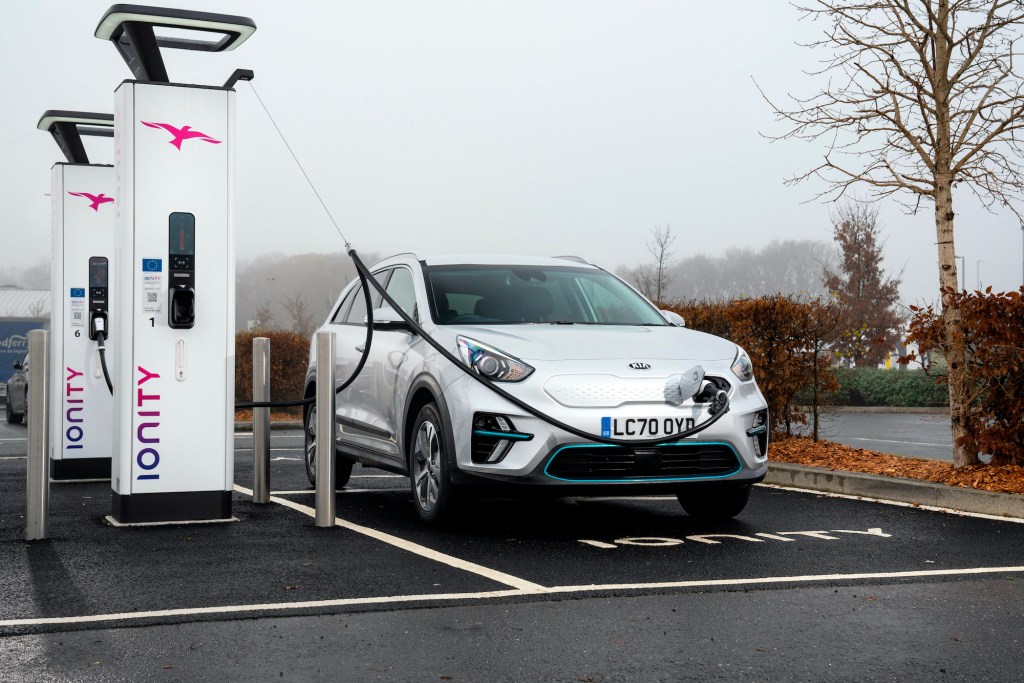
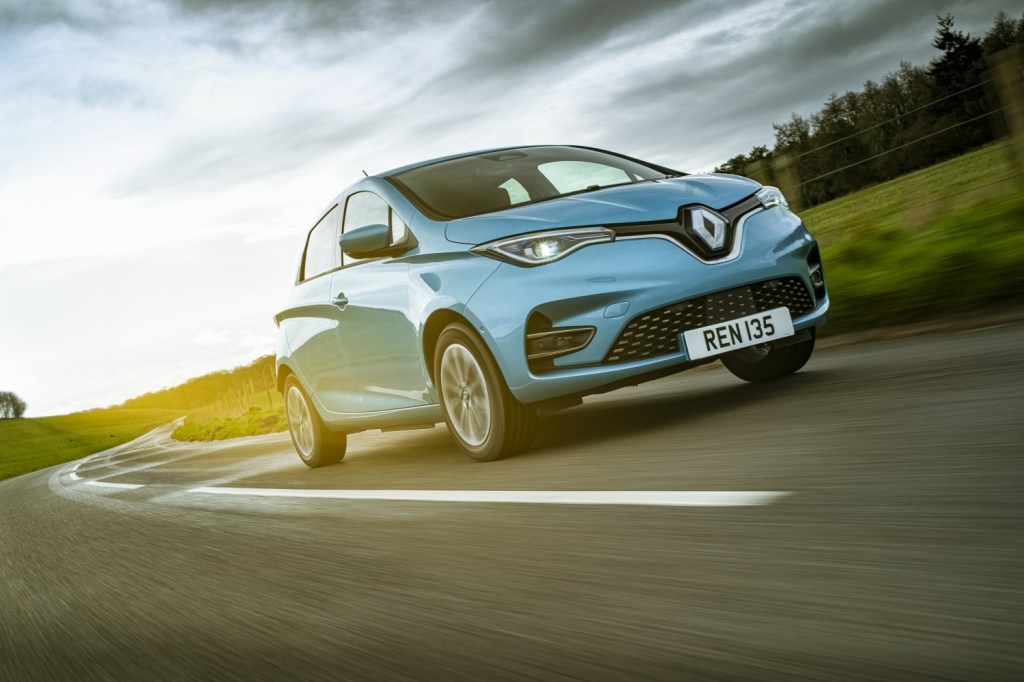
EV models which received the highest satisfaction scores included: the Volkswagen ID.3, Kia Niro Plug-in Hybrid, and BMW 3 Series saloon (all 100); Tesla Model 3 (96); Kia e-Niro (96); and the Hyundai KONA electric (94). Nearly all the models, including popular ones such as the Renault Zoe (92) and Nissan Leaf (90), also achieved high levels of driver commitment.

The survey results come at a time of record-breaking sales for the electric vehicle industry. Latest industry figures show that for the year-to-date 9.7 per cent of all new car sales had a plug, compared to 3.2 per cent in 2019, and 1.1 per cent in 2015.

Melanie Shufflebotham, Co-Founder of Zap-Map, commented: “Our latest poll shows the strong and enduring impact of switching to a clean car. The evidence in favour of electric vehicles grows more compelling with each one of our surveys, even in a year as disruptive as 2020. 

“The challenge for the automotive industry is to take advantage of the opportunities that EVs present, not only in terms of the rapidly expanding range, but also ensuring that sales staff are knowledgeable enough to present the benefits to their customers. 

RAC spokesperson Rod Dennis said: “While the challenge is often convincing owners of petrol and diesel vehicles to switch to an electric vehicle in the first place, this data shows that once people have done so they seldom look back – which is also positive news for manufacturers that are investing heavily in electric vehicles and cleaner technology. 

“While would-be electric car drivers might worry about range anxiety, they should also be aware that the number public charge points is increasing rapidly and infrastructure continues to improve. They should also remember that the vast majority of their journeys are unlikely to be over several hundred miles meaning that for day-to-day travel, operating an electric vehicle is a clean and cost-effective option.

“These figures show the momentum that is behind getting drivers into electric vehicles, something that is likely to build as we move closer to the end of the sale of new petrol and diesel cars by 2030. We are doing our bit in giving drivers confidence they can make the switch, with 80 of our patrol vans now fitted with mobile emergency charging units, and half our fleet fitted with All-Wheels-Up recovery systems, removing the need for drivers to wait for a flatbed if they need a tow.”

208 powers ahead

Peugeot e-208

By Bill McCarthy


Peugeot has a proud record with small cars. The 205 GTi, which  became an icon of the British roads back in the 1980s, the most notable example.

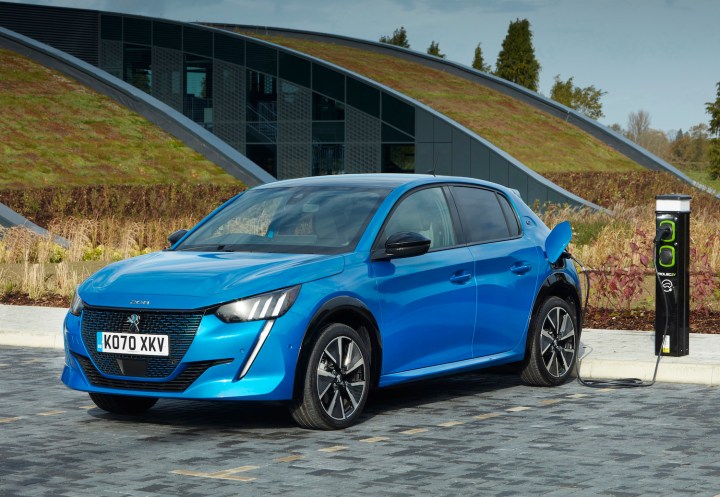
That has continued with the latest 208 and particularly the e-208, the first all-electric car in the Peugeot range. It is already challenging the best on the market as more and more people start looking at electric cars seriously, battery range improves and charging infrastructure widens.

It needs to be good as it is up against challengers like the Honda E, Corsa-e, Renault Zoe and Kia e-Niro and MINI electric.

It features an electric 50kWh, 136bhp powertrain with a claimed 217 miles range (WLTP) from a single charge. While never working on a full charge, three-quarter charge showed a range of 161 miles, there was never the range anxiety associated with earlier electric cars and I always felt there was power to spare.

 The firm recommends using a wallbox charger, so the car comes with a Mode 3 Type 2 cable as standard, which will charge the vehicle in 7.5 hours with a 7kW charging point. There is also an optional facility for a booster charge cable which will give 80 per cent charge in around 30 minutes at certain charging points. The standard three-pin plug connector can take up to 14 hours for a full charge.

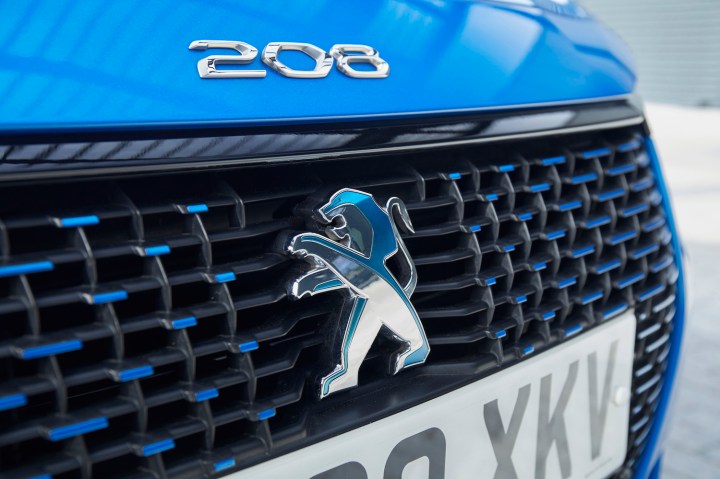
The latest 208 is a very stylish car and while the  e-208 is essentially the same as its combustion siblings, it adds some neat little touches to distinguish it, including body coloured chequered front grille, a bespoke ‘e’ monogram and a clever innovation to the signature Peugeot Lion badge, which changes colour from different angles. This version also featured gloss black wheel arch extensions, and a diamond black roof. 

Prices start at £28,100 for the Active model, rising to more than £33k for the the GT driven here.

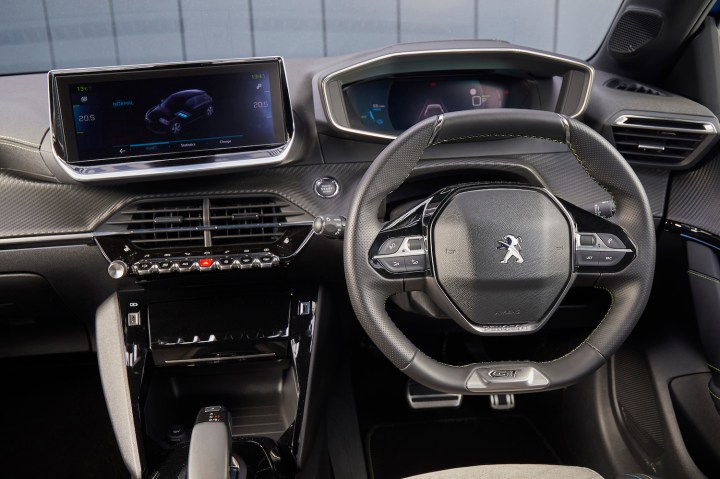
The inside, which features the latest ‘3D i-Cockpit’, has a real premium feel, with high-end soft touch finish to dash and doors and neat chrome touches, piano-style control switches and heated, leather-trimmed front seats on this model.

It is dominated by a new 10-inch colour touchscreen and Connected 3D Navigation with Tom Tom live updates available, and controls major functions in the car like connectivity and infotainment.

 The central console houses a a nifty little drive selector and the car features the now familiar compact steering wheel.

This GT specification is exclusive to the electric car and includes front and rear parking sensors and 180˚ reversing camera, 17-inch alloys active and ambient interior lighting.

Safety features include cyclist and pedestrian detection, full LED headlights, automated parking, adaptive cruise control, lane and blind spot assistance.

 On the road, in true electric style, it is very nippy indeed, the instant torque powering it to 60mph in just under eight seconds, after which acceleration slows considerably, before reaching a top speed of just over 90mph, where permitted.

 It handles well, feeling stable and assured, even if the GT suspension and larger wheels make it feel firm, sometimes uncomfortable over poor road surfaces.

As with all electric cars, you are constantly monitoring the range and the regenerative braking. It is selected via the B on the gear lever, and puts charge back into the battery as it the car slows. It also means you are inclined to drive more economically to maximise power recovery.

But when the power is needed, however, it is instantly on tap.

Being a relatively small car, space is at a premium. But both head and legroom is decent for front passengers, but is more cramped in the rear.

As a hatchback, it also pretty practical with boot capacity ranging from standard 311 litres, stretching the 1,106 litres with the rear seats folded. In addition there are number of stowage areas and compartments.

 For easy of charging, customers can also download the MyPeugeot app, which will allow them to manage their vehicle charge remotely, precondition the temperature of the vehicle and receive ‘e-Coaching’ on how to benefit most from their vehicle. 

 As a first all electric effort, this is an impressive debut and should set a high standard across PSA brands. It also looks good by not falling into the trap of making electric power look slighty weird.

Factfile

Peugeot e-208 GT 136

Price: £33,150

Mechanical: 136bhp, 50kWh electric motor driving front via CVT auto gearbox

Max speed: 93mph

0-60mph: 8.1 seconds

Range: 211 (WLTP)

Insurance group: 31E

CO2 emissions: 0 g/km

Warranty: 3yrs/60,000 miles