

Honda Jazz Crosstar EX e:HEV
By Bill McCarthy
With crossovers all the rage, it seems even established models are getting the treatment Such is the case with the new Jazz, a supermini which has been around since 2001, and is now offering smart styling in two forms, the traditional best-selling hatch and the more SUV-like Crosstar driven here.
The result remains affordability and practicality, with this latest hybrid version, carrying Honda’s new e:HEV badge, delivering amazing fuel economy.
Driving many cars over the years, despite what official mpg figures may say, experience gives an indication of what kind of economy is being delivered, not to mention the clear evidence of the fuel level indicator on the dash. While official figures are around the 60mpg mark, I was getting nearer 70mph with really trying too hard. This included town, country and motorway driving.
The new Crosstar variant is designed, says Honda, to target those with active lifestyles with a more rugged appearance which includes, increased ride height, new grille, black cladding to wheel arches, roof bars and silver and black alloys. It also has its own blue colour scheme with the option contrasting black roof.
‘On the road, the car feels nippy enough and is a very comfortable place to be’
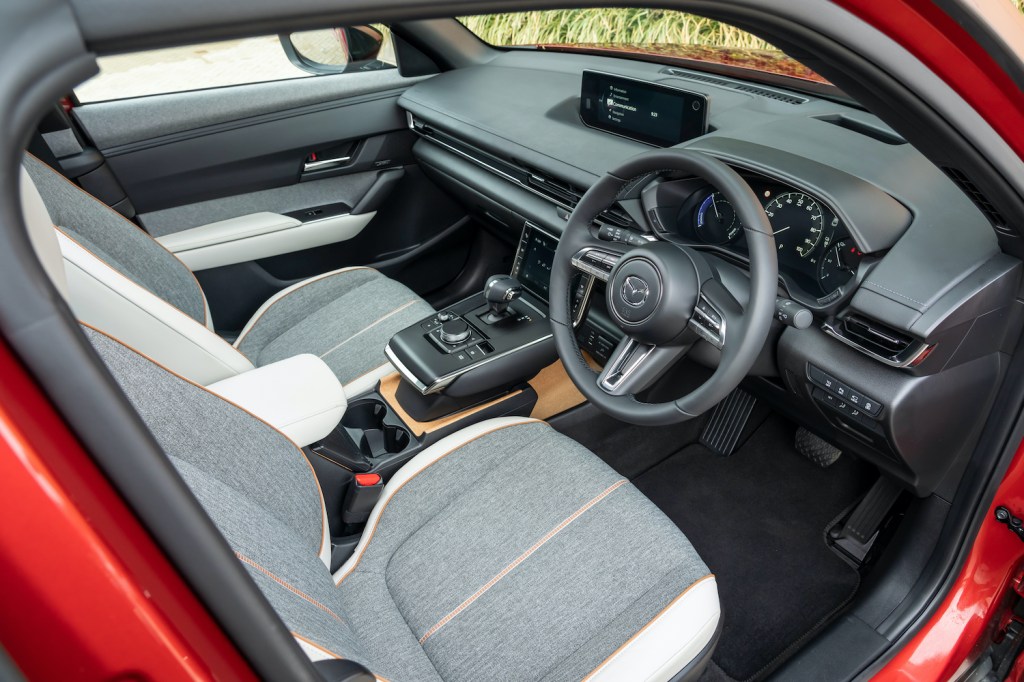
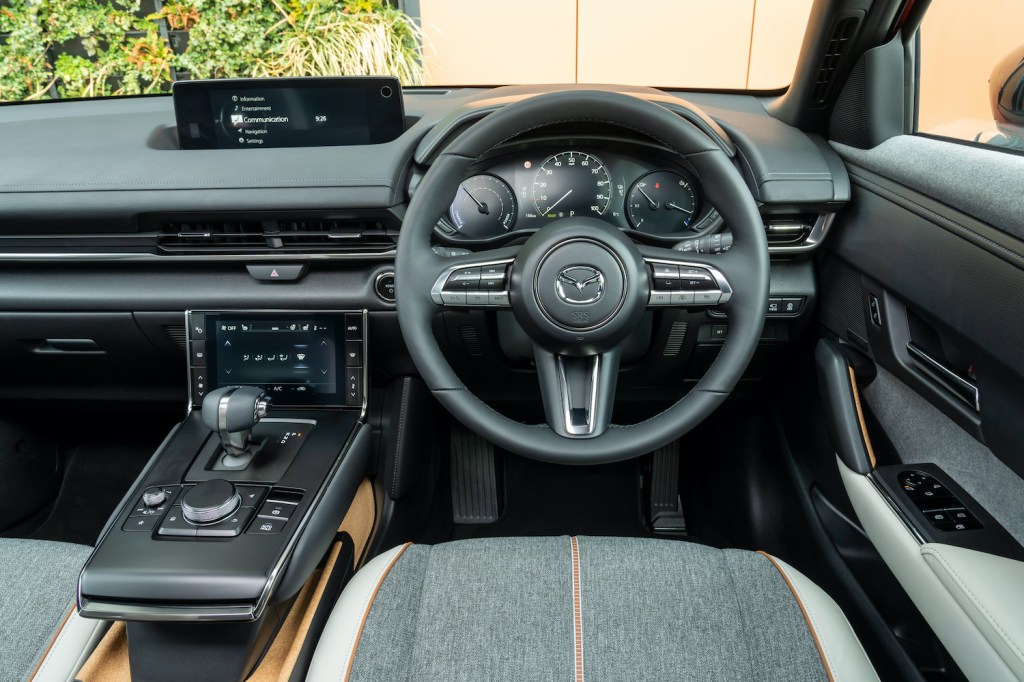
|nside it features a very less-is-more set up. The firm says its ‘Yoo no bi’ philosophy offers a clean, minimalist interior, wrapping utility, practicality and functionality in a simple, uncluttered ergonomic cabin.
In other words it’s a fairly minimalist setup, with no-nonsense, durable plastics, offset by the occasional soft-touch areas and features wipe-clean seats. It has a central touchscreen, seven or nine-inch, depending on model, which controls navigation, smartphone connectivity with Apple CarPlay and Android Auto and an uprated, eight-speaker sound system. Also included are WiFi hotspot capability, while ‘Honda Personal Assistant’ delivers voice-enabled features and My Honda+ app keeps owners connected when they are away from the car
Other rotary controls are simple to use and supplemented by a seven-inch full TFT instrument cluster and multi-function steering wheel.
It feels roomy for a smallish car with the upright driving position, loads of head and legroom both in the front, and, importantly for a family vehicle, class leading legroom to the rear. In addition a large glass windscreen, flanked by narrower A pillars, allows plenty of light into the cabin.


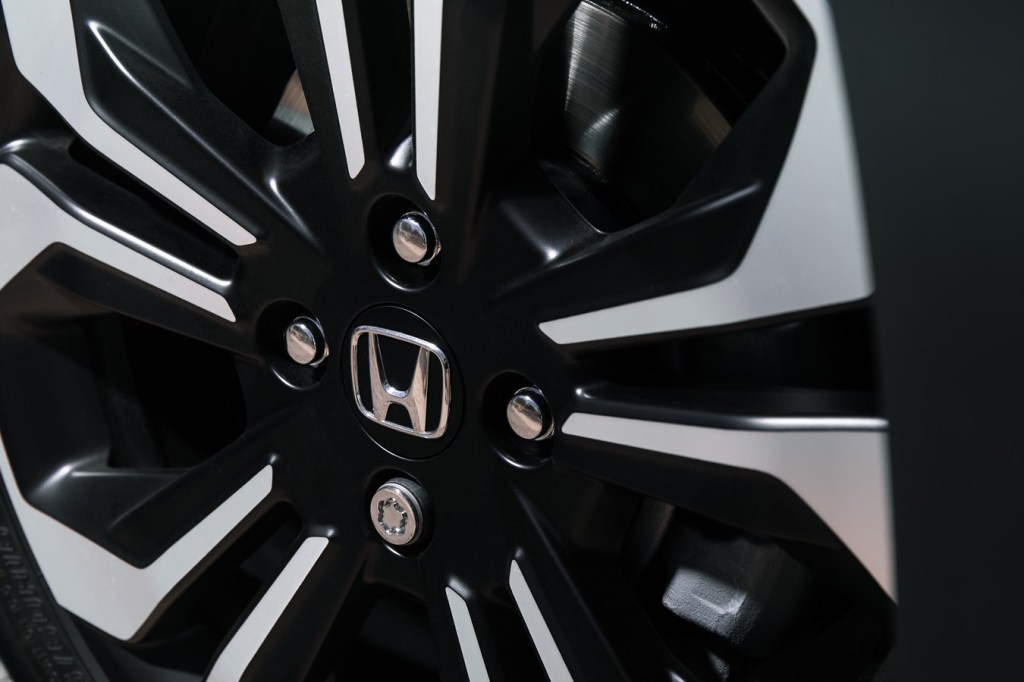
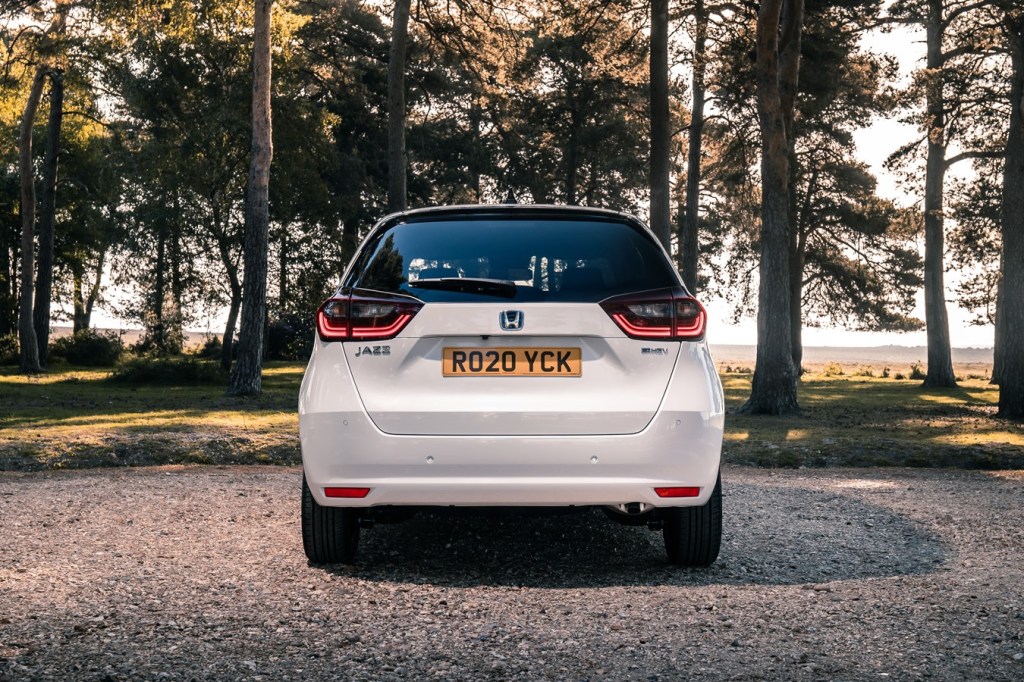

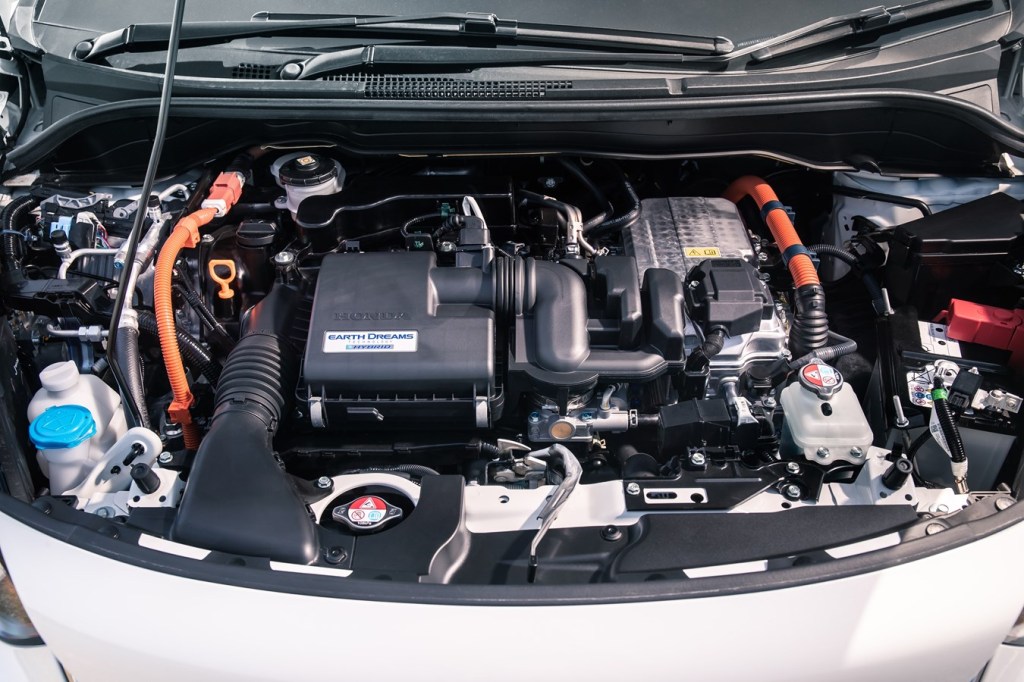


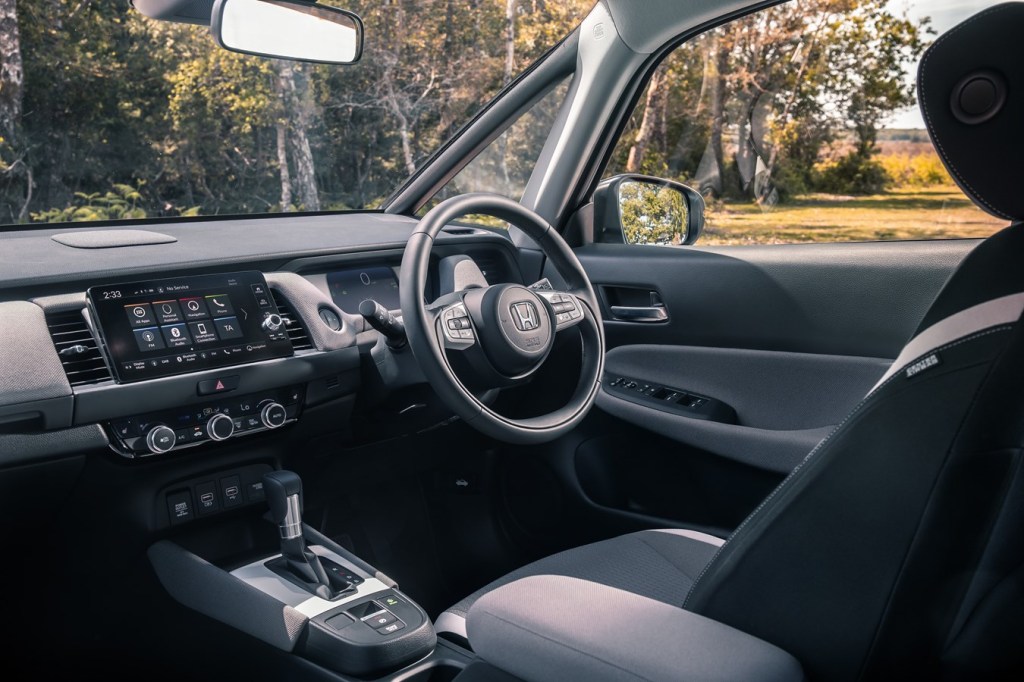


Stowage space is impressive with central bin and side pockets while the boot offers 298 litres, increasing to a maximum 1,199 litres to the roof with the rear seats down. Honda’s uprated ‘Magic Seat’ configuration offers both fold-flat or flip-up seat flexibility to accommodate cargo of various shapes and sizes and a wider tailgate opening and new flat floor eases loading and unloading. A rubber protective mat is also included in the boot space.
The power setup includes two electric motors connected to a 1.5-litre petrol engine and lithium-ion battery. The combination propels the car to 62mph in not-too-pedestrian 9.9 seconds and on to a maximum speed of 109mph.
Drivers are offered three drive modes: EV Drive where the battery drives the electric motor directly, ideal for congestion charge zones and fuel saving; hybrid drive where the engine supplies power to the electric generator motor, which in turn supplies it to the electric motor and full combustion engine drive.
In most cases it is a combination of EV and Hybrid. Engine drive also kicks in where extra power is needed for greater acceleration.The power units are mated to a new e-CVT setup, not my favourite type transmission. There is no doubt it is fuel efficient, but the accelerating hard has your teeth on edge, until it settles down at the required speed.
On the road, the car feels nippy enough and is a comfortable place to be. The higher stance means there is some body roll, but occupants are well insulated from road and engine noise, apart from under heavy acceleration.
It is packed with safety kit, with a full complement of 10 airbags, including a new front centre airbag. Also new is Honda SENSING technology, which includes new wider angle high-definition camera, collision mitigation braking, adaptive cruise control, lane assist system, road departure adjustment, blind spot and traffic sign system and speed limiter.
FAST FACTS
Honda Jazz Crosstar EX e:HEV
Price: £23,585
Mechanical: 107bhp, 1,498cc, 4cyl petrol engine driving and electric motors, driving front wheels via CVT transmission
Max speed: 109mph
0-60mph: 9.9 seconds
Combined mpg: 58.9
Insurance group: 26
CO2 emissions: 110g/km
Warranty: 3yrs/90,000 miles



 On the road